

Feeling dizzy on low-carb can feel unsettling fast, especially if you already monitor your blood pressure or have a complicated health history.
Some people notice lightheadedness when standing up, shaky energy, fatigue, headaches, or a strange “off balance” feeling within the first days or weeks of lowering carbohydrates. It is easy to assume something is going wrong, or that low-carb simply is not right for your body.
In many cases, though, feeling dizzy on low-carb is connected to predictable changes involving fluid loss, electrolyte shifts, blood pressure shifts, and the body’s adaptation to lower carbohydrate intake.
The good news is that these symptoms are often manageable with a gentler approach, steadier hydration, balanced electrolytes, and more consistent meals.
In this guide, we will look at why dizziness can occur on a low-carb diet, how hydration and minerals affect blood pressure and stability, simple ways to feel steadier again, and when dizziness should not be ignored.

Why You Feel Dizzy on Low-Carb
Dizziness on a low-carb diet is usually linked to a few predictable changes that occur when the body starts using fewer carbohydrates.
Changes in fluid balance, electrolytes, blood pressure, and energy regulation can all contribute to feeling lightheaded or unsteady, especially during the first days or weeks of lowering carbs. For people already managing high blood pressure or other health concerns, these shifts can feel unsettling and may raise questions about whether something is going wrong.
1. Electrolyte changes
When you cut back on carbs, your body often releases extra water. Along with that fluid, you also lose important minerals such as sodium, potassium, and magnesium. If these levels drop too low, you may feel weak, lightheaded, tired, or unsteady.
If you want a simple guide to these minerals, you can read more about electrolytes on low-carb.
2. Blood pressure shifts
Losing too much fluid can sometimes lower blood pressure more than expected, especially for people already taking blood pressure medication or diuretics. For people already taking blood pressure medication, these shifts may feel more noticeable, especially during the early stages of low-carb eating.
You may notice dizziness when standing up quickly, walking around after sitting, or changing positions too fast.
3. Blood sugar changes
With fewer carbs, blood sugar often becomes steadier over time. However, during the first stage of lowering carbohydrates, the body is still adapting to using less glucose for energy.
That adjustment period can sometimes feel like shakiness, fatigue, brain fog, or lightheadedness.
What matters most
Feeling dizzy on low-carb does not automatically mean something is wrong. In many cases, the body simply needs time, hydration, balanced electrolytes, and steadier meals to adapt more comfortably.
With a gentler low-carb approach, many people find these symptoms gradually improve as the body becomes more stable and consistent.
For a bigger-picture view of how food choices fit in, you might find “What to Eat on Low Carb with High Blood Pressure” helpful.
Simple Ways to Feel Steadier on Low-Carb
Feeling dizzy on low-carb does not always mean you need to stop. In many cases, small adjustments help the body adapt more comfortably and steadily.
Stay hydrated consistently
Low-carb eating often causes the body to release extra water, especially during the early stages. Drinking water steadily through the day may help reduce lightheadedness and fatigue.
Instead of drinking large amounts all at once, try spreading water intake more evenly throughout the day.
Pay attention to electrolytes
When fluid levels change, mineral levels such as sodium, potassium, and magnesium can also drop. That imbalance may contribute to dizziness, weakness, headaches, or low energy.
Simple ways to support electrolytes include:
- adding a moderate amount of salt to meals, based on your clinician’s guidance
- eating leafy greens and other low-carb vegetables
- considering a mild electrolyte drink without large amounts of sugar
Avoid skipping meals
Some people cut carbs too aggressively and end up eating too little overall. Long gaps between meals may worsen shakiness or lightheadedness, especially at first.
Simple meals with protein, healthy fats, and low-carb vegetables often help energy feel more stable.
Stand up slowly
Dizziness sometimes becomes more noticeable when standing quickly, especially after sitting or lying down for a while.
Moving more slowly and giving the body a moment to adjust can help reduce sudden lightheadedness.
Reduce carbs gradually if needed
You do not have to cut carbohydrates dramatically overnight.
For some people, a slower transition feels easier on the body. Reducing one meal or one major carb source at a time may help you adjust with fewer symptoms.
Include potassium-rich low-carb foods
Potassium helps support fluid balance, muscle function, and blood pressure regulation.
Low-carb foods that naturally contain potassium include:
- leafy greens
- avocado
- mushrooms
- zucchini
- salmon
Avoid extreme restriction
Very aggressive low-carb plans may increase the chances of dizziness, fatigue, and dehydration, especially if you already take blood pressure medication or have other health concerns.
A calmer, more sustainable approach is often easier to maintain and may help the body adapt more comfortably over time.
When Dizziness Should Not Be Ignored
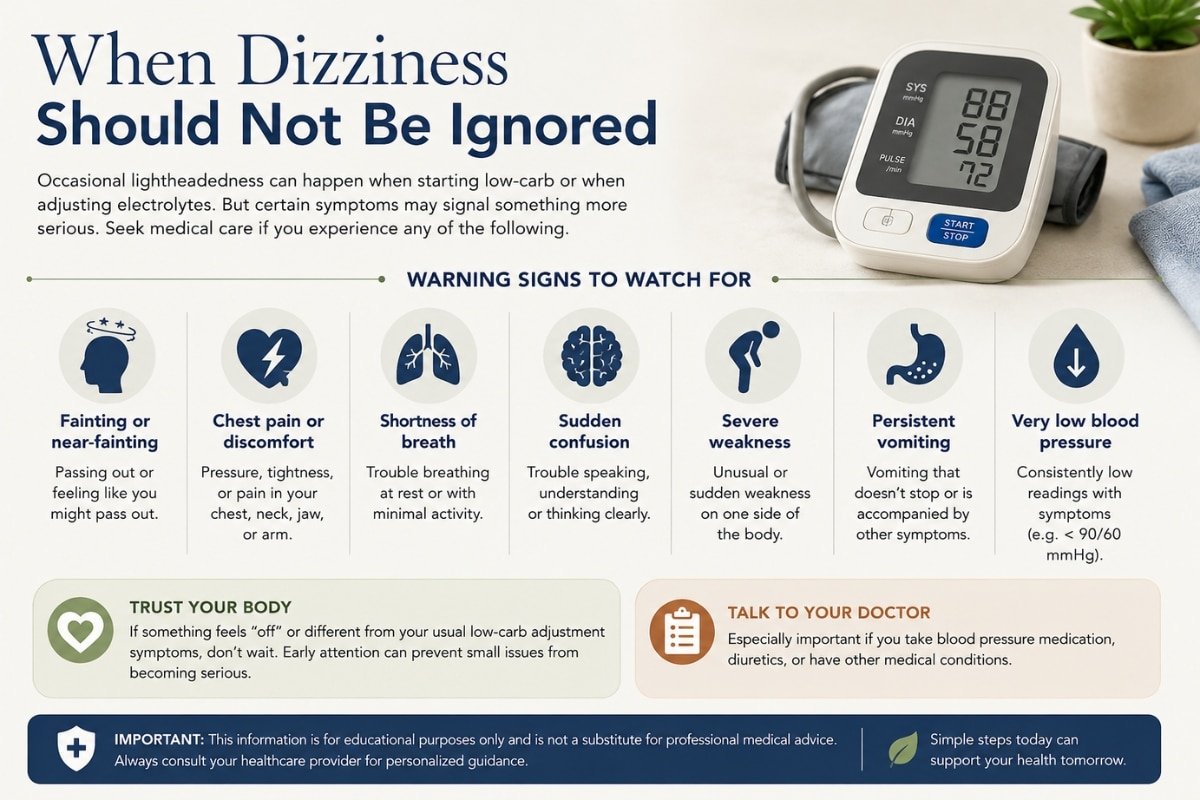
Mild dizziness during the early stages of low-carb eating is fairly common, especially as the body adjusts to changes in fluid and electrolyte levels.
However, some symptoms should not be ignored.
It is important to speak with a healthcare professional if dizziness becomes severe, frequent, or starts affecting daily activities.
Pay closer attention if you notice:
- fainting or feeling close to fainting
- chest pain or pressure
- shortness of breath
- confusion or trouble concentrating
- severe weakness
- ongoing vomiting or diarrheavery low blood pressure readings
dizziness that continues getting worse instead of improving
Extra caution is important if you:
- take blood pressure medication
- take diuretics (“water pills”)have kidney problems
- have diabetes
- recently changed medication doses
For some people, lowering carbohydrate intake may change how the body responds to blood pressure medication or affect fluid balance. That is one reason a slower, more monitored approach often feels safer and more sustainable.
If something feels significantly different or concerning, it is always better to check in with a healthcare professional rather than trying to “push through” symptoms.
A Slower, Steadier Approach Often Works Best
Feeling dizzy on low-carb can feel uncomfortable and sometimes worrying, especially during the early stages of changing how you eat.
In many cases, though, these symptoms are connected to fluid shifts, electrolyte changes, blood pressure adjustments, and the body adapting to fewer carbohydrates.
Small, steady changes usually work better than extreme restrictions. Staying hydrated, supporting electrolytes, eating regular meals, and giving your body time to adjust may help you feel more stable and comfortable over time.
If you want a simple place to start, the Blood Pressure Support Cheat Sheet can help you quickly review low-carb foods, electrolytes, and daily habits that support steadier energy and healthier blood pressure.
If symptoms feel severe, persistent, or concerning, it is important to speak with a healthcare professional, especially if you take blood pressure medication or manage other health conditions.