

Trying to figure out what to eat for high blood pressure can quickly become exhausting. One article says to cut carbs completely. Another says avoid salt at all costs. Then someone else tells you to count every gram, track every meal, and follow a perfect routine every single day.
Most people do not need more confusion. They need something realistic they can actually stick to.
A simple low-carb meal plan for high blood pressure can help reduce daily stress by making meals more predictable, balanced, and easier to repeat during busy weeks. Instead of chasing perfection, the goal is to focus on simple foods that support steadier energy, better consistency, and healthier daily habits over time.
This guide keeps things practical. No extreme keto rules. No complicated recipes. Just simple low-carb meals built around protein, healthy fats, vegetables, and repeatable routines that feel manageable in real life.
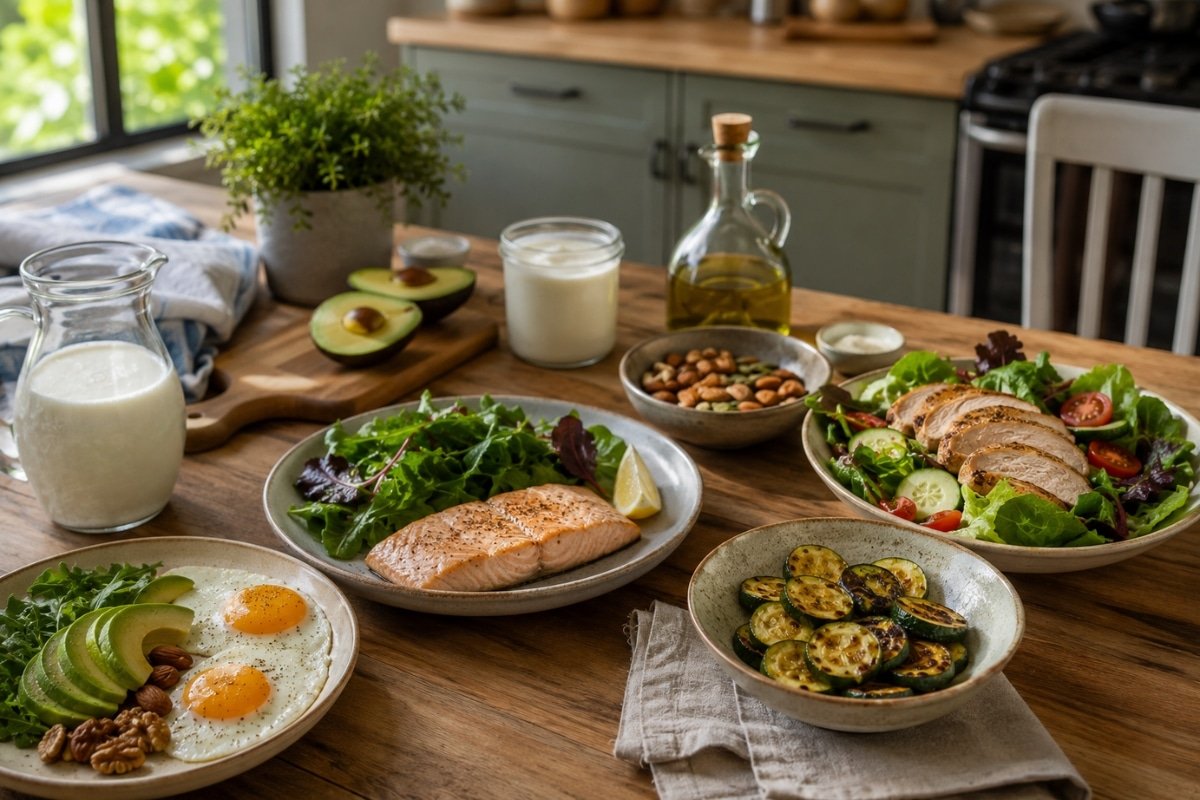
Why Meal Planning Matters for Blood Pressure Support
A simple low-carb meal plan for high blood pressure can make healthy eating feel far less overwhelming.
Instead of constantly wondering what to cook, you already have simple meals ready to repeat during the week.
Benefits of meal planning include:
- fewer impulsive processed meals
- less reliance on takeout or packaged foods
- steadier energy throughout the day
- fewer blood sugar crashes and cravings
- less daily food-related stress
- easier long-term consistency
For many people, consistency matters more than perfection.
Simple, repeatable meals built around protein, vegetables, and healthy fats are often easier to maintain over the long term than complicated diet plans that feel exhausting after a few days.
What Makes a Low-Carb Meal Blood Pressure-Friendly?
Not all low-carb meals automatically support healthy blood pressure. Some “keto” meals can still be heavily processed, extremely high in sodium, or lacking important nutrients like potassium and magnesium.
A blood pressure-friendly low-carb meal usually focuses on simple whole foods, balanced protein, healthy fats, and vegetables that help support steadier energy and better overall metabolic balance.
Prioritise Protein
Protein helps meals feel more filling and satisfying, which may make it easier to stay consistent with low-carb eating long term.
Simple protein options include:
- eggs
- salmon
- chicken
- sardines
- Greek yogurt
Many of these foods also pair well with vegetables rich in potassium and magnesium, which can be important when following a low-carb meal plan for high blood pressure and supporting overall metabolic balance.
Focus on Potassium-Rich Low-Carb Foods
Potassium helps support healthy fluid balance, nerve function, and muscle function, which is one reason it matters for blood pressure support.
Many low-carb whole foods naturally contain potassium, including:
- avocado
- spinach
- zucchini
- broccoli
- leafy greens
Building meals around these foods may also help make low-carb eating feel more balanced and nutrient-dense, rather than relying heavily on processed “keto” products.
Include Healthy Fats
Healthy fats help meals feel more satisfying and may help reduce constant snacking or cravings throughout the day.
Simple low-carb healthy fats include:
- olive oil
- avocado
- nuts and seeds
These foods also pair well with protein and vegetables, helping create meals that feel balanced, practical, and easier to stay consistent with over the long term.
Watch Highly Processed “Keto” Foods
Not every food labeled “keto” is automatically healthy for blood pressure support.
Many packaged keto snacks, bars, and frozen meals can still contain:
- very high sodium levels
- artificial ingredients
- preservatives
- highly processed oils
- hidden sweeteners
Simple whole foods usually work better in the long term.
Meals built around real ingredients like eggs, vegetables, salmon, chicken, olive oil, kefir, nuts, and avocado often feel more balanced, satisfying, and easier to maintain consistently than heavily processed keto products. A low-carb meal plan for high blood pressure also tends to feel more sustainable when the focus stays on simple everyday foods rather than packaged “keto” convenience products.
Important Note About Electrolytes on Low-Carb
Low-carb eating can change how the body holds fluids and electrolytes, especially during the first few weeks.
That is one reason some people notice symptoms like:
- dizziness
- fatigue
- headaches
- weakness
- muscle cramps
Sodium, potassium, and magnesium all play important roles in fluid balance, energy production, and muscle function.
This is also why many people feel better when they focus on electrolyte-rich foods rather than cutting carbs aggressively.
If you want to understand this more deeply, read:
7-Day Simple Low-Carb Meal Plan for High Blood Pressure
This simple low-carb meal plan for high blood pressure is designed to keep meals realistic, balanced, and easy to repeat during busy weeks.
The goal is not perfection. It is to build simple routines around protein, vegetables, healthy fats, and electrolyte-rich foods that may help support steadier energy, better consistency, and healthier daily habits over time.
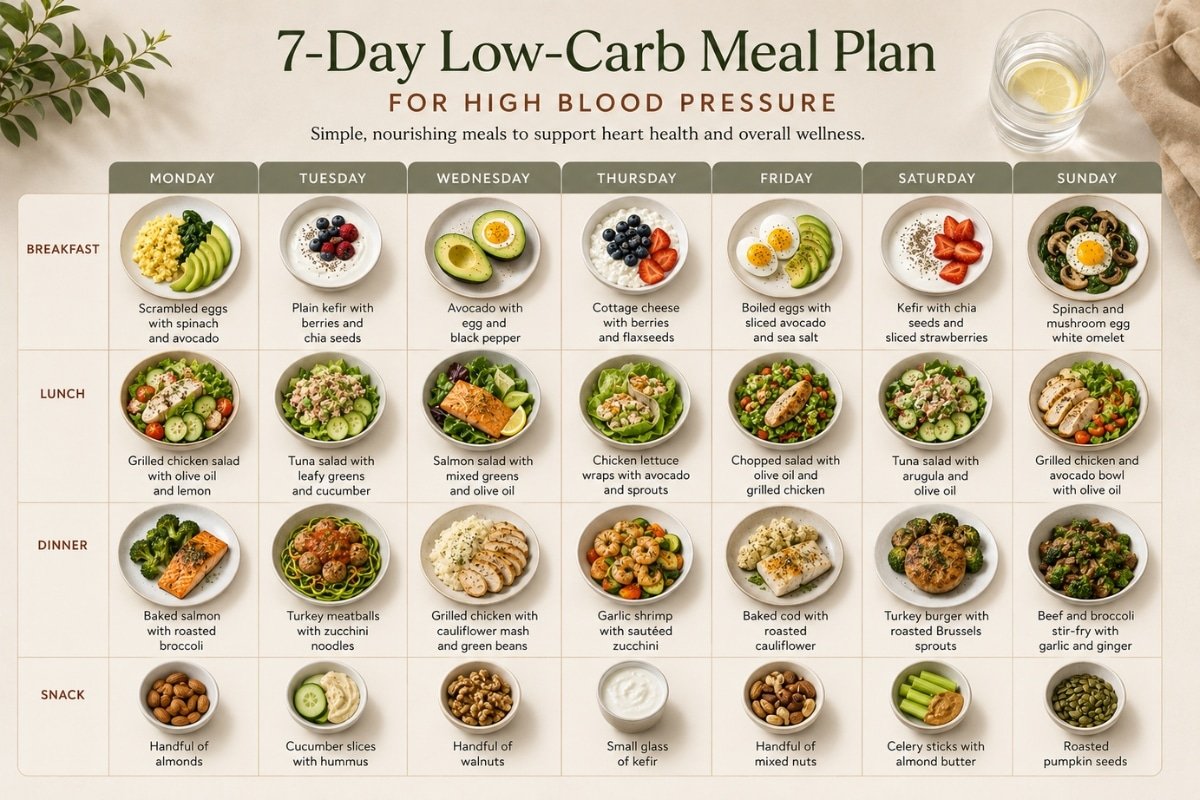
Day 1
Breakfast
10-minute low-carb breakfast plate with eggs and avocado
Lunch
Chicken salad with olive oil dressing and cucumber
Dinner
Salmon with leafy greens and roasted zucchini
Snack
A handful of almonds or walnuts
Day 2
Breakfast
Greek yogurt with chia seeds and berries
Lunch
Sardine salad with olive oil and lemon
Dinner
Chicken thighs with creamy garlic spinach
Snack
Celery with cream cheese<
Day 3
Breakfast
Egg muffins with spinach and feta
Lunch
Turkey lettuce wraps with avocado
Dinner
Cauliflower mash with grilled chicken
Snack<
Boiled eggs
Day 4
Breakfast
Low-carb smoothie with protein, spinach, and almond milk
Lunch
Leftover chicken thighs with broccoli
Zucchini noodles with olive oil and grilled chicken
Snack
Cheese slices and cucumber
Day 5
Breakfast<
Scrambled eggs with sautéed spinach
Lunch
Low-carb snack plate with turkey, cheese, olives, and cucumber
Dinner
Keto chicken soup with electrolyte-rich broth
Snack
Pumpkin seeds
Day 6
Breakfast
Greek yogurt with walnuts
Lunch
Egg salad lettuce bowls
Dinner
Low-carb beef and broccoli skillet
Snack
Avocado with sea salt
Day 7
Breakfast
10-minute breakfast plate with eggs and avocado
Lunch
Leftover beef and broccoli bowl
Dinner
Low-carb turkey and broccoli casserole
Snack
Olives and cheese
Tips to Make Low-Carb Meal Planning Easier
Low-carb meal planning becomes much easier when meals stay simple, repeatable, and realistic for everyday life. Small strategies like preparing leftovers, repeating favorite meals, and keeping basic low-carb foods available can reduce stress and make healthy eating feel far more manageable long term.
Repeat Meals on Purpose
Repeating a few simple meals each week can make low-carb eating feel far less stressful. It reduces the need for constant decision-making, simplifies shopping, and makes meal preparation much more manageable during busy weeks.
For many people, consistency improves when meals become familiar and easy to repeat rather than trying to create completely different meals every day.
Cook Extra for Leftovers
Cooking extra portions at dinner can make low-carb meal planning much easier during busy weekdays. Leftovers reduce cooking time, simplify lunches, and help prevent last-minute decisions that often lead to processed convenience meals.
Keep Emergency Low-Carb Foods Ready
Keeping a few simple low-carb foods available at all times can make healthy eating much easier during stressful or busy days.
Helpful staples include:
- eggs
- sardines
- nuts
- frozen vegetables
Having easy backup foods ready often helps prevent impulsive takeout meals or highly processed snacks.
Do Not Chase Perfection
A simple low-carb meal plan for high blood pressure does not need to be perfect to be helpful. In many cases, steady routines and realistic habits matter far more than trying to follow an extreme version of keto perfectly every day.
Common Mistakes That Make Meal Planning Harder
Sometimes low-carb meal planning becomes harder than it needs to be. Many people unknowingly make a few common mistakes that increase stress, overwhelm, and inconsistency, rather than making healthy eating feel simpler and more sustainable.
Trying to Change Everything Overnight
Trying to overhaul your diet immediately can be overwhelming. In many cases, small, consistent changes are easier to maintain over the long term than following a strict low-carb routine perfectly for a few days before giving up.
Buying Too Many Specialty Keto Products
Many packaged “keto” foods are expensive, heavily processed, and often unnecessary. In many cases, simple whole foods like eggs, vegetables, salmon, kefir, nuts, and olive oil create a more balanced and sustainable low-carb routine.
Ignoring Electrolytes and Hydration
Low-carb eating can affect fluid and electrolyte balance, especially during the early adjustment period. Not getting enough sodium, potassium, magnesium, or fluids may contribute to symptoms like headaches, fatigue, weakness, or dizziness.
Making Meals Too Complicated
Low-carb eating can affect fluid and electrolyte balance, especially during the early adjustment period. Not getting enough sodium, potassium, magnesium, or fluids may contribute to symptoms like headaches, fatigue, weakness, or dizziness.
Frequently Asked Questions
Can low-carb meals help support healthy blood pressure?
For some people, a low-carb meal plan for high blood pressure may help support steadier energy, better metabolic balance, and healthier daily eating habits.
Meals built around protein, vegetables, healthy fats, and fewer highly processed carbohydrates may also help reduce reliance on packaged convenience foods that are often high in sodium and refined ingredients.
The goal is not extreme dieting. In many cases, simple sustainable habits are what matter most over time.
What are the best low-carb foods for blood pressure support?
Some of the best low-carb foods for blood pressure support include foods rich in protein, potassium, healthy fats, and important minerals like magnesium.
Helpful options may include:
- salmon
- eggs
- leafy greens
- avocado
- broccoli
- zucchini
- olive oil
- sardines
- nuts and seeds
- plain kefir or Greek yogurt
In many cases, simple whole foods work better long term than heavily processed “keto” products.
Do you need to count every carb?
Not necessarily.
Many people do better focusing on simple habits like eating more whole foods, reducing highly processed carbohydrates, and building balanced low-carb meals rather than obsessively tracking every gram.
For some people, tracking carbs can be useful at first. But in the long term, consistency and sustainability are usually more important than trying to follow a “perfect” low-carb meal plan for high blood pressure every day.
Can you meal prep low-carb meals in advance?
Yes. Meal prepping can make low-carb eating much easier during busy weeks.
Many low-carb meals store well for several days, including:
- grilled chicken
- roasted vegetables
- egg muffins
- cauliflower mash
- salads with protein
- soups and casseroles
Preparing a few meals or ingredients ahead of time can reduce stress, save time, and make healthy eating feel more manageable in the long term.
What drinks are best on a low-carb lifestyle?
Simple drinks usually work best on a low-carb lifestyle.
Common low-carb options include:
- water
- mineral water
- herbal tea
- black coffee
- unsweetened tea
- electrolyte drinks without added sugar
Some people also include plain kefir in moderation because it provides protein, probiotics, and important minerals like potassium and calcium.
Staying hydrated is especially important when following a low-carb meal plan for high blood pressure because fluid and electrolyte balance can change during the adjustment period.
How long does it take to adjust to low-carb eating?
Many people begin adjusting within a few days, while others may need a few weeks to feel fully comfortable with low-carb eating.
During the early transition period, some people notice symptoms like:
- fatigue
- headaches
- cravings
- dizziness
- low energy
This is often related to fluid and electrolyte changes rather than carbohydrates alone.
Starting gradually, staying hydrated, eating enough protein, and focusing on electrolyte-rich foods may help make the adjustment period feel easier to manage.
Final Thoughts

A low-carb meal plan for high blood pressure does not need to feel restrictive or overwhelming. In many cases, the most sustainable approach is to focus on practical meals, repeatable routines, and small daily habits that feel realistic enough to maintain over the long term.
You do not need extreme dieting or perfect keto eating to start making meaningful changes. Over time, small consistent improvements often add up far more than short periods of perfection followed by burnout.
If you want extra support with low-carb foods, electrolytes, and everyday habits that support healthier blood pressure, download the free Blood Pressure Support Cheat Sheet.
You may also find these guides helpful: