

Articles
How to Monitor Blood Pressure at Home
Many people monitor blood pressure at home daily after noticing fluctuating readings at medical appointments, feeling stressed, or wanting a clearer picture of how daily habits affect their health. Home monitoring has become much more common because it allows people to see what happens outside the doctor’s office, where stress, rushing, or anxiety can sometimes temporarily raise numbers.
One of the biggest benefits of monitoring blood pressure at home is being able to notice patterns earlier. Some people discover that their reading changes after poor sleep, dehydration, high-stress days, processed foods, or inconsistent routines. Others notice improvements after making changes to their diet, movement, hydration, or low-carb eating habits.
Blood pressure naturally changes throughout the day. Readings can shift based on stress levels, caffeine, physical activity, sleep quality, hydration, meals, and even emotions. That is why one single reading usually does not tell the full story.
Instead of becoming overly focused on a single number, it is usually more helpful to consistently monitor blood pressure at home over time and look for trends. Regular tracking often gives a much better understanding of what may be helping or affecting your blood pressure from day to day.
Why Home Blood Pressure Monitoring Matters
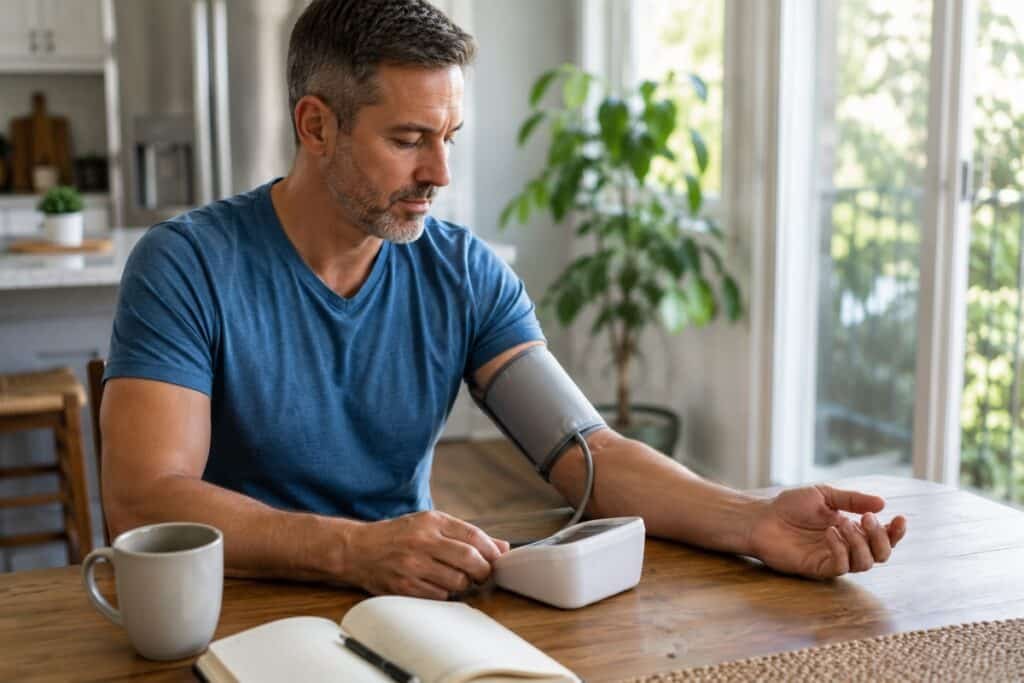
Learning to monitor blood pressure at home became important to me after one dangerously high reading reached 160/235. Thankfully, I did not suffer a stroke, but that experience made me realize how important regular monitoring can be.
Blood pressure can change throughout the day based on:
- stress
- sleep
- hydration
- caffeine
- meals
- movement
- illness
That is one reason home readings can sometimes give a more realistic picture than occasional clinic visits.
Monitoring blood pressure at home may also help people notice patterns connected to low-carb eating and daily habits. Some people notice changes after improving sleep, staying hydrated, reducing processed foods, or becoming more consistent with movement and meals.
It is also important to remember that one reading does not tell the whole story. Blood pressure naturally rises and falls throughout the day.
What matters more is consistency and trend tracking over time. Regular monitoring can help you better understand what may be affecting your blood pressure day to day.
What You Need to Monitor Blood Pressure at Home
You do not need complicated equipment to monitor blood pressure at home, but using the right setup can make your readings more accurate and consistent.
Automatic Upper-Arm Monitor
Most healthcare professionals recommend using an automatic upper-arm monitor rather than wrist or finger devices. Upper-arm monitors are generally considered more reliable and consistent for home use.
It is also important to use the correct cuff size. A cuff that is too small or too large can affect your readings, making them less accurate. Many monitors include sizing guides to help match the cuff to your arm.
Comfortable Quiet Place
Try to check your blood pressure in a calm, quiet area where you can sit comfortably for a few minutes without distractions.
Stress, noise, talking, or rushing around immediately before checking can temporarily raise readings. Sitting calmly helps create more consistent results.
Simple Tracking System
Tracking your readings over time is often more useful than focusing on one isolated number.
You can use:
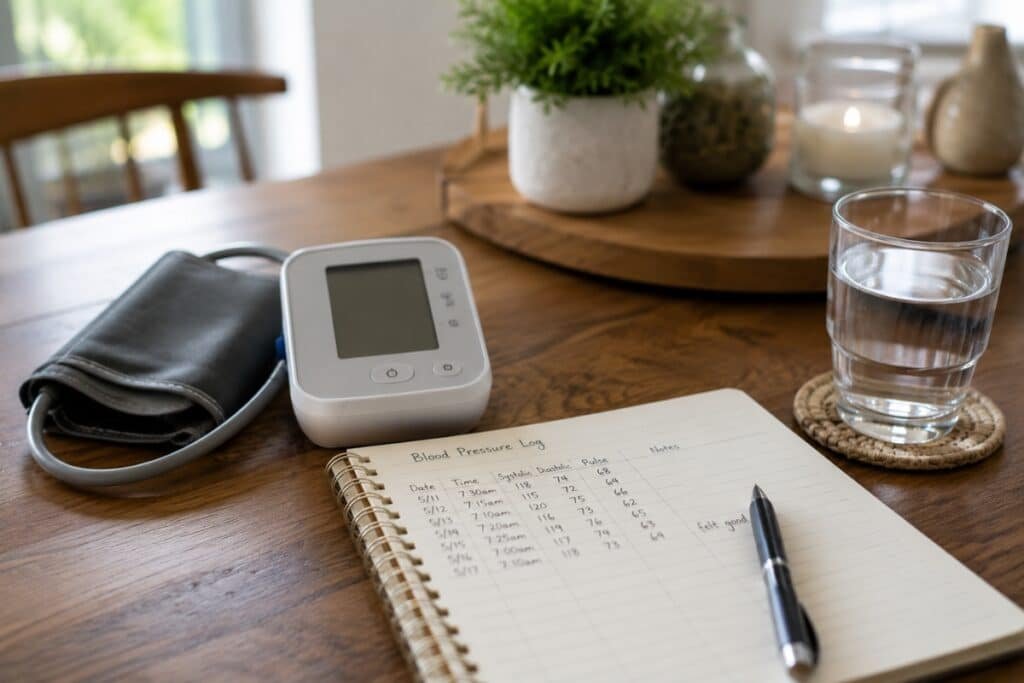
- a notebook
- a printable blood pressure tracker
- a phone app
- the memory feature built into some monitors
Keeping a simple record may help you notice patterns connected to sleep, stress, food, hydration, exercise, or daily routines over time.
How to Prepare Before Taking a Reading
A few small things before checking your blood pressure can affect how accurate your reading is. Preparing properly helps create more consistent results when you monitor blood pressure at home.
Avoid These Beforehand
Try to avoid these shortly before taking a reading:
- caffeine
- smoking
- exercise
- large meals
These can temporarily raise blood pressure and affect the numbers you see on the monitor.
Sit Quietly First
Before checking your blood pressure, sit calmly for about 5 minutes.
During that time:
- keep both feet flat on the floor
- support your back against a chair
- rest your arm at heart level
- avoid talking or scrolling on your phone
This gives your body time to settle before taking the reading.
Why Preparation Affects Accuracy
Stress, movement, rushing around, or even talking during a reading can temporarily increase blood pressure.
That is why preparation matters. The goal is to create similar conditions each time you monitor blood pressure at home so your readings are easier to compare over time.
Step-by-Step: How to Take Blood Pressure at Home
Once you are seated comfortably and relaxed, you can begin taking your reading. Following the same process each time helps create more consistent results when you monitor blood pressure at home.
Step 1: Sit Correctly
Sit upright in a chair with your back supported and both feet flat on the floor. Try not to cross your legs.
Rest your arm on a table or armrest so the cuff sits around heart level.
Step 2: Place the Cuff Properly
Wrap the cuff around your bare upper arm according to the monitor instructions.
The cuff should feel snug but not painfully tight. Positioning matters because an incorrectly placed cuff can affect your reading.
Step 3: Stay Still and Quiet
Once the monitor starts, remain still and avoid talking.
Talking, moving, laughing, or checking your phone during the reading can temporarily raise blood pressure and affect accuracy.
Step 4: Take Two or Three Readings
Instead of relying on a single reading, many people take two or three readings, spaced about 1 minute apart.
Blood pressure naturally fluctuates, so multiple readings often provide a more realistic picture.
Step 5: Record the Average
Write down the average reading along with the time of day and anything that may have affected it, such as stress, poor sleep, illness, caffeine, or exercise.
Over time, tracking patterns may help you better understand what affects your blood pressure day to day.
Want a simple reminder sheet for daily blood pressure support habits? Download the Low-Carb Blood Pressure Cheat Sheet here.

The Best Time to Check Blood Pressure
The best time to monitor blood pressure at home is usually when your body is calm, and your routine is fairly consistent. Checking at similar times each day makes it easier to notice patterns over time.
Morning Readings
Many people check their blood pressure in the morning before:
- coffee
- breakfast
- exercise
- stressful activities
Morning readings may provide a better baseline before the day starts affecting your numbers.
Evening Readings
Some people also take readings in the evening, ideally around the same time each day.
This can help show how stress, meals, activity, hydration, or fatigue may affect blood pressure later in the day.
Why Timing Consistency Matters
Blood pressure naturally changes throughout the day, so random readings taken at different times can sometimes feel confusing.
Checking your blood pressure under similar conditions each day often makes it much easier to spot trends and notice what may be influencing your readings over time.
What Can Temporarily Raise Blood Pressure Readings
Blood pressure is not completely fixed throughout the day. Many everyday factors can temporarily raise readings, which is why numbers sometimes change from one check to another.
Stress and Anxiety
Stress, worry, and anxiety can temporarily increase blood pressure. Even feeling nervous while checking your reading may affect the result.
Poor Sleep
Sleep quality plays a major role in blood pressure regulation. Poor sleep, interrupted sleep, or ongoing sleep deprivation may contribute to higher readings over time.
Dehydration
Not drinking enough fluids can affect circulation and blood pressure balance. Some people also become dehydrated more easily when starting low-carb eating due to increased water loss.
High-Sodium Processed Foods
Highly processed foods often contain large amounts of sodium, especially packaged meals, takeout, sauces, processed meats, and snack foods. Some people notice temporary increases in blood pressure after eating these regularly.
Caffeine
Coffee, energy drinks, and other caffeinated beverages may temporarily raise blood pressure in some people, especially shortly after consumption.
Pain or Illness
Pain, inflammation, fever, or illness can place additional stress on the body and temporarily affect blood pressure readings.
Lack of Movement
Prolonged sitting and inactivity may also affect circulation and overall cardiovascular health over time. Even simple daily movement can help support healthier routines and metabolic balance.
How Low-Carb Eating May Affect Blood Pressure
Some people notice changes in blood pressure fairly quickly after reducing their carbohydrate intake, especially during the first few weeks of low-carb eating. Changes in hydration, electrolyte balance, and water loss may all influence readings during this adjustment period.
Monitoring blood pressure at home may help people notice patterns connected to food, hydration, and daily habits over time. If you want to learn more about low-carb eating and blood pressure support, read: Low-Carb Foods That Support Healthy Blood Pressure.
Common Mistakes When Monitoring Blood Pressure at Home
Small mistakes during home monitoring can affect readings more than many people realize. That is one reason blood pressure numbers sometimes seem inconsistent or confusing.
Talking During Readings
Talking, laughing, or moving during a reading can temporarily raise blood pressure and affect accuracy.
It is best to stay quiet and relaxed until the monitor finishes.
Using the Wrong Cuff Size
Cuff size matters more than many people think. A cuff that is too small or too large may produce inaccurate readings.
Using the correct upper-arm cuff size helps create more reliable results when you monitor blood pressure at home.
Checking Immediately After Activity
Exercise, climbing stairs, rushing around, or even stressful conversations can temporarily increase blood pressure.
Sitting quietly for several minutes before checking usually provides more consistent readings.
Panicking Over One High Reading
One isolated high reading does not always mean something dangerous is happening. Blood pressure naturally changes throughout the day based on stress, sleep, food, hydration, movement, and emotions.
That is why trend tracking over time is usually more useful than focusing on a single number.
Constantly Rechecking Due to Anxiety
Repeatedly checking blood pressure out of fear or anxiety can sometimes create even more stress and temporarily raise readings further.
For many people, a calm, consistent routine works much better than constantly monitoring throughout the day.
When to Speak With a Healthcare Professional
Home monitoring can be helpful, but consistently elevated readings or sudden major changes in blood pressure should not be ignored.
Seek medical attention if changing blood pressure readings are accompanied by symptoms such as:
- dizziness
- chest pain
- severe headaches
- shortness of breath
- fainting
- vision changes
Some people notice changes in blood pressure after improving their diet, sleep, hydration, or daily habits. However, medication adjustments should always be discussed with a qualified healthcare professional rather than changing doses independently.
Final Thoughts
Learning to monitor blood pressure at home is not about becoming fearful of every number that appears on the screen. It is about becoming more aware of how your body responds to daily habits, stress, food, sleep, hydration, and lifestyle changes over time.
Blood pressure naturally fluctuates, which is why trends usually matter far more than isolated readings. Looking at patterns over days and weeks often provides a much clearer picture than focusing on a single stressful moment or an unusually high number.
Certain daily habits may also influence blood pressure readings over time, including sleep, hydration, stress levels, physical activity, and dietary choices. If you want to explore that further, read: Daily Habits That Support Healthy Blood Pressure.
In many cases, small, consistent habits support long-term progress better than extreme changes. Regular sleep, hydration, movement, stress management, and simple whole-food meals may not seem dramatic day-to-day, but over time, those routines can make a meaningful difference.
FAQ
How often should you check your blood pressure at home?
Many people check their blood pressure once in the morning and once in the evening when first starting home monitoring. Over time, some people reduce the frequency of monitoring once they understand their normal patterns.
It is usually more helpful to monitor consistently rather than check repeatedly throughout the day due to anxiety.
What is considered a normal blood pressure reading?
General blood pressure ranges vary depending on age, medical history, and individual health factors. Many healthcare organizations consider readings around 120/80 mmHg to fall within a normal range for adults.
However, blood pressure targets should always be discussed with a healthcare professional.
Can stress temporarily raise blood pressure?
Yes. Stress, anxiety, emotional overwhelm, and even nervousness during a reading can temporarily increase blood pressure.
That is one reason resting quietly before taking a reading is important.
Should blood pressure be checked before or after eating?
Many people prefer checking blood pressure before meals, coffee, or caffeine, especially in the morning. Large meals can temporarily affect circulation and blood pressure readings in some people.
Consistency matters more than perfection. Try to check under similar conditions each time.
Does dehydration affect blood pressure readings?
Yes. Dehydration can affect circulation, fluid balance, and blood pressure regulation.
Some people following low-carb diets may become dehydrated more easily during the early adjustment phase due to increased water loss.
Can low-carb eating lower blood pressure?
Some people notice improvements in blood pressure after reducing processed foods, losing weight, improving blood sugar balance, and following a lower-carbohydrate eating pattern.
However, responses vary among individuals, and medication adjustments should always be made under professional guidance.
Why are home blood pressure readings different from those in the doctor’s office?
Stress, rushing, anxiety, noise, movement, and unfamiliar environments can sometimes temporarily raise readings during medical appointments.
Home monitoring may provide a more realistic picture of normal day-to-day blood pressure patterns.
Is it normal for blood pressure to change during the day?
Yes. Blood pressure naturally rises and falls throughout the day based on activity, stress, sleep, hydration, meals, caffeine, emotions, and physical movement.
That is why people who regularly monitor blood pressure at home usually gain a much clearer picture from long-term trends rather than focusing on a single isolated reading.