

Articles
7 Best Low-Carb Vegetables for Blood Pressure
Low-carb vegetables for blood pressure are often where confusion starts. You are not confused because you lack discipline. You are confused because food choices have become inconsistent, and your body is reacting to that noise.
When you try to manage blood pressure on a low-carb approach, vegetables can feel especially unclear. Some are promoted as “healthy,” but still spike blood sugar or leave you feeling bloated, while others quietly support more stable energy and better balance.
The best low-carb vegetables for managing blood pressure aren’t about variety or perfection. They are about choosing a small group of foods that your body handles well and using them consistently.
When your inputs stabilize, your body signals become clearer, a pattern consistent with the American Heart Association’s blood pressure guide.
Hunger settles. Energy becomes more predictable. And blood pressure patterns often become easier to manage alongside everything else.
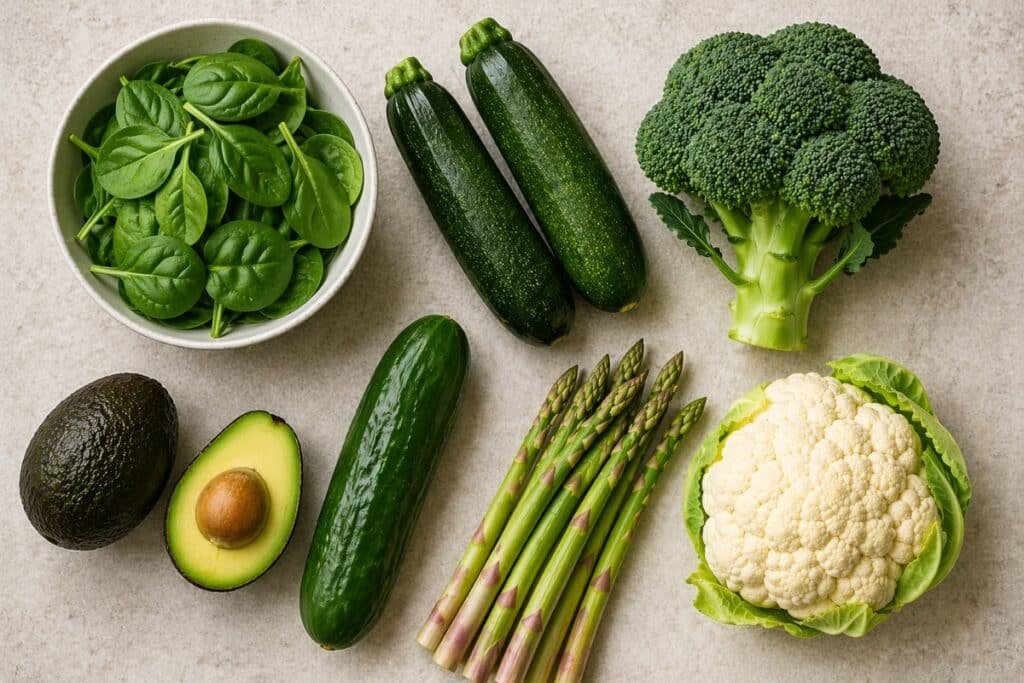
Best Low-Carb Vegetables For Managing Blood Pressure
You do not need a long list of vegetables. A small group you can repeat is enough, as outlined in the low-carb foods for blood pressure section.
1. Spinach and leafy greens
Rich in potassium and magnesium, which help balance sodium and support more stable blood pressure. Easy to cook or use raw.
2. Zucchini
Very low in carbs and easy to digest. Works well in simple, repeatable meals without affecting blood sugar.
3. Broccoli
Provides fiber and minerals while keeping meals filling and stable. A reliable base vegetable.
4. Cucumber
Hydrating and light. Adds volume to meals without increasing carbs or digestive stress.
5. Avocado
Although technically a fruit, it plays an important role. High in potassium and healthy fats that support steady energy.
6. Asparagus
Naturally supports fluid balance and pairs well with simple protein-based meals.
7. Cauliflower
Very low in carbohydrates and highly versatile. Works well as a base for simple meals while helping keep blood sugar stable.
You do not need all of these every day. Choose a few that work well for you and keep them consistent.
Principles Of Choosing Low-Carb Vegetables For Blood Pressure
Choosing vegetables on a low-carb diet is not about randomly eating more greens. It is about selecting the right types that support stability instead of adding more variables.
1. Prioritize potassium-rich, low-carb vegetables
Potassium plays a key role in balancing sodium and supporting normal blood pressure. Focus on vegetables like leafy greens, zucchini, and avocado that fit a low-carb approach while supporting electrolyte balance.
2. Keep blood sugar impact low and predictable
Some vegetables can still create subtle glucose swings. Non-starchy vegetables such as spinach, broccoli, and cucumber tend to provide fiber and nutrients without triggering noticeable spikes.
3. Reduce digestive and inflammatory “noise”
Even healthy foods can cause bloating or discomfort. Keep your vegetable choices simple and repeatable so you can clearly notice how your body responds.
4. Build consistency instead of variety
A short, repeatable list of vegetables gives better feedback than constantly changing meals. Stability in your food choices supports steadier energy levels, hunger signals, and blood pressure patterns.
The principle is simple. Fewer variables, clearer signals, better adjustments.
Step-by-Step Guide To Building A Low-Carb Vegetable Base
You do not need a long list of vegetables. You need a small system that works consistently.
Step 1: Choose 3–5 Core Vegetables
Pick a small group from the list above and repeat them during the week.
The goal is consistency, not variety.
Step 2: Pair Vegetables With Protein And Healthy Fats
Vegetables alone are not enough to stabilize energy. Combine them with:
- eggs, chicken, or fish
- olive oil, avocado, or butter
This helps slow digestion and keeps blood sugar steady, which supports more stable blood pressure patterns.
Step 3: Keep Preparation Simple
Use the same preparation methods most days:
- sautéed greens
- roasted vegetables
- raw + olive oil
Less variation makes it easier to identify what works and what does not.
Step 4: Adjust Based On Your Body Signals
After meals, notice:
- How long do you feel full
- Whether energy stays steady
- If bloating or cravings appear
If something feels off, change only one variable, not the entire meal.
The cauliflower mash with olive oil and herbs is an easy first swap if potatoes are what you miss.
Maintaining Consistency With Low-Carb Vegetables
Once your vegetable choices are simple, consistency becomes more important than perfection.
If something feels off, change only one variable, not the entire meal.
This becomes easier when you follow simple low-carb meal ideas that support blood pressure.
Watch Your Body’s Responses
Pay attention to:
- fullness after meals
- steady vs. crashing energy
- cravings later in the day
Stable vegetable choices often reduce fluctuations that can indirectly affect blood pressure through stress and energy swings.
Avoid Constant Food Changes
Switching vegetables daily makes it harder to see patterns. Keep meals similar for several days before making adjustments.
Use Routine To Reduce Food Noise
When you know which vegetables you are eating and how they affect you, decision fatigue drops. Your meals become predictable, and your body responds with clearer signals.
Optimizing Your Vegetable Choices Over Time
You do not need a complete reset. Small adjustments are enough.

Identify Your Personal Tolerance
Some people do well with more cruciferous vegetables. Others feel better with softer options like zucchini. Test one change at a time and observe.
Support Electrolyte Balance
Low-carb eating changes how your body handles fluids and minerals. Vegetables that contain potassium and water, combined with proper sodium intake, help maintain balance.
Make Small, Targeted Adjustments
- Slightly increase or reduce portion size
- Swap one vegetable at a time
- Adjust the cooking method if digestion feels off
The goal is simple:
Keep your low-carb vegetables for blood pressure consistent and focus on options that support stable energy so your blood pressure patterns are easier to manage.
Try the free 60-second blood pressure check, and the Blood Pressure Support Cheat Sheet comes with it.