
Articles
Best Protein Sources for Blood Pressure: Check the Sodium
You have been told to eat more protein. Nearly everyone writing about low-carb says it, and they're not wrong. But standing at the fridge on a Tuesday evening, that advice doesn't tell you much.
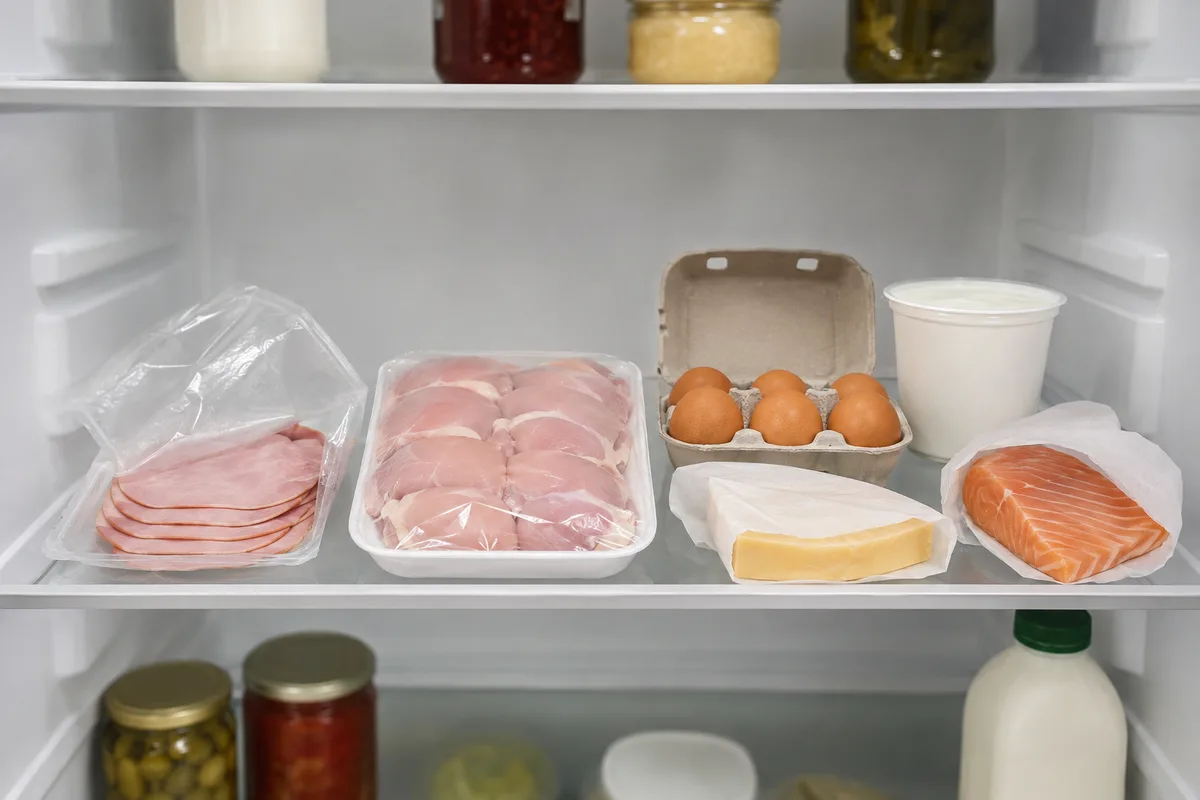
Is the ham in the door alright? What about the bacon. Someone once said red meat was bad for blood pressure. Someone else said too much protein is hard on your kidneys. And the fish everyone recommends is expensive, and you're not sure you like it.
So the question isn't really "how much protein". It's: which of these things can I actually put on a plate without worrying I've made it worse?
There is an answer, and it's simpler than the advice around it.
This is the protein part of a bigger picture. If you're still working out what the whole plate looks like, what to eat on low-carb with high blood pressure is the better place to start, and the low-carb foods that support healthy blood pressure page carries the full grocery list.
Protein itself is not the lever you have been told it is
This is the part worth knowing before anything else, because it takes a weight off.
In feeding trials where some carbohydrate was replaced with protein, average blood pressure moved by a little over 1 mmHg. That's real, but it's small. And the researchers who pooled those forty trials said plainly that they couldn't tell whether the change came from the extra protein or from the carbohydrate that came out of the diet to make room for it.
One trial is worth describing, because of how tightly it was run. In a controlled feeding study of 164 people with early or stage 1 high blood pressure, a protein-richer version of a healthy eating pattern lowered systolic readings by about 1.4 mmHg on average, and by about 3.5 mmHg among those who already had high blood pressure. Everyone in that trial was fed all of their meals for six weeks. Which is not how any of us live.
So protein is worth eating. It tends to leave people feeling fuller for longer, which makes a simple routine easier to stick to, and it's the backbone of a low-carb plate. It's not a lever for your readings.
Which means the anxious question, am I eating the right protein?, has been pointed at the wrong thing.
A note if you have been worrying about your kidneys
Plenty of people arrive at low-carb eating having heard that protein is hard on the kidneys, and nobody has ever explained it properly.
I am not going to try to settle that here, because it cannot be settled in general. If you have kidney disease, how much protein is right for you is a question for your doctor or a renal dietitian, not something to work out from an article. The same goes for potassium. What is right depends on your own kidney function, and that is something only they can see.
If you don't have a kidney problem, this isn't the thing to spend your worry on. The salt is.
The difference between one protein and another is mostly salt
Here is the number that changes the question.
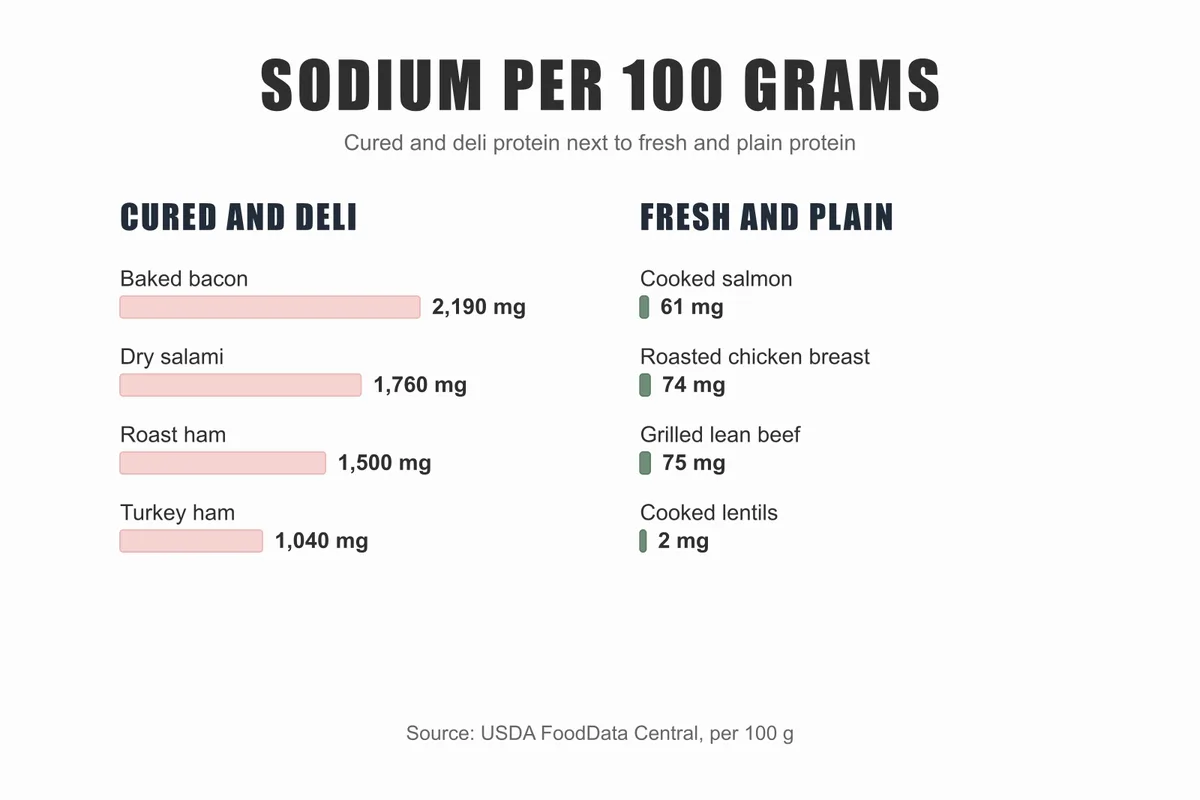
Per 100 grams, baked bacon carries about 2,190 mg of sodium. Dry salami, about 1,760 mg. Roast ham, about 1,500 mg. Even sliced turkey ham, the extra-lean deli kind, comes in around 1,040 mg.
Per 100 grams, cooked salmon carries 61 mg. Roasted chicken breast, 74 mg. Grilled lean beef, 75 mg. Cooked lentils, 2 mg.
Those figures come from the US Department of Agriculture's FoodData Central database, measured per 100 grams of the food as you would eat it.
That is a difference of roughly thirty-six times between one protein and another, and it dwarfs anything protein itself does to a reading. Most of that gap is the curing, the brining and the packet rather than the meat underneath.
Which is not to say red meat is off the hook entirely. In the studies that followed people over years, higher red meat intake was associated with a slightly higher chance of developing high blood pressure, about 14% per 100 grams a day. That is an association in observational data, not a cause, and it rests on weaker evidence than the sodium figures above. But it is there, and I would rather tell you than leave it out because it is inconvenient.
The sodium gap isn't a fringe finding, either. When researchers looked at where sodium actually comes from in the everyday diet, deli meat sandwiches came out as the single largest source, at about 6% of all the sodium people eat.
Sodium is also the place where the advice you have been given contradicts itself. I would rather name that than pretend it doesn't happen.
Blood pressure guidance says reduce sodium. Low-carb guidance says replace what you lose when you cut carbs, because you do lose more of it early on. Both of those are true, for different people. Which one applies to you depends on you, your medication, your kidney function and your own readings.
How much sodium is right for you is a question for your doctor, not a number an article can hand you. What is useful here is knowing where the sodium in your protein is actually coming from, so you have something specific to bring to that conversation.
Best protein sources for blood pressure, grouped rather than ranked
I've grouped these by how much thought they need, rather than ranking them best to worst. Ranking invites the feeling that you've picked wrong, and that's the last thing this needs.
Easy everyday, buy them without thinking
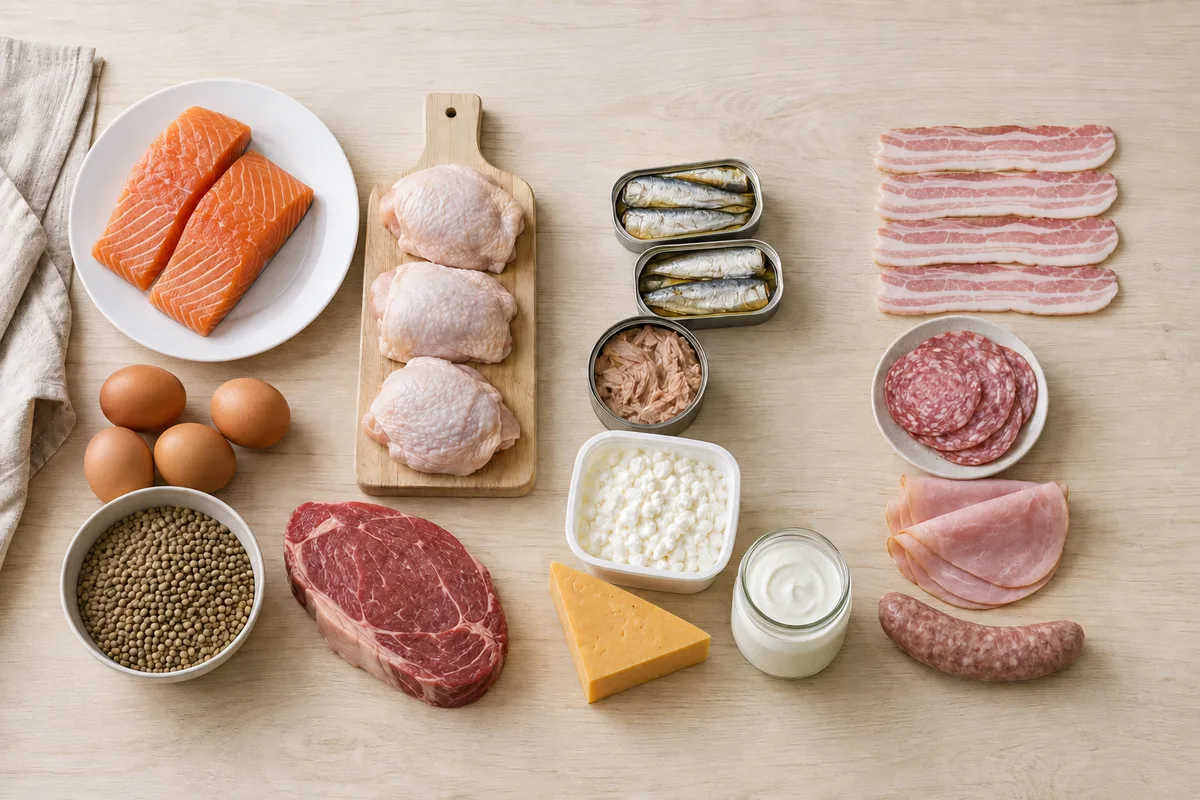
Fresh fish and plain frozen fillets. Chicken thighs and breasts, plain, not marinated. Fresh ground meat and cuts of beef, lamb and pork. Eggs. Dried or canned beans and lentils with no salt added.
None of these arrive salted. Roasted chicken breast measures 74 mg of sodium per 100 grams, grilled lean beef 75 mg, a hard-boiled egg 124 mg, cooked lentils 2 mg. Whatever salt ends up in the meal, you added. Which means you decide.
On fish, I want to be straight with you, because this is where a lot of writing overpromises. Oily fish is genuinely good food: solid protein, no carbohydrate, very little sodium. But the trials that found a blood pressure effect from omega-3 used 2 to 3 grams of EPA and DHA a day. That's a supplement-sized amount, well beyond two fish meals a week.
And when researchers followed large groups of people over years, eating more fish was not linked to a lower chance of developing high blood pressure.
So eat the salmon and the sardines if you like them. Federal advice is at least 8 ounces of seafood a week, with salmon, sardines, canned light tuna and trout among the lowest-mercury choices. Just don't buy it as blood pressure medicine, and don't force it down if you hate it. Oily fish does carry omega-3 that chicken and beef don't, which is a good reason to eat it. Lowering your readings isn't.
Worth a glance at the label
Canned fish, cheese and cottage cheese, plain yogurt.
Canned fish is the one where the label genuinely decides. Canned sardines and tuna sit well above fresh fish for sodium but nowhere near cured meat, and no-salt-added versions exist on most shelves. Draining and rinsing is why a lot of people buy it that way. Cottage cheese is saltier than most people expect.
None of these are off the table. They just aren't automatic the way a plain chicken thigh is.
Where sodium adds up fast
Bacon, ham, salami, prosciutto, chorizo, sausages, frankfurters, sliced deli meat, jerky, and the marinated or breaded things in the refrigerated section.
I'm not telling you never to eat bacon. I'm telling you that if convenient protein has quietly become most of your protein, that's where your sodium is. Better to see it plainly than to feel vaguely guilty about it.
In studies that followed people over years, higher processed meat intake was associated with a slightly higher chance of developing high blood pressure, around 12% per 50 grams a day, with the confidence interval brushing right up against no effect at all. A soft signal, not a warning light. The sodium figures are the firmer ground.
One practical note. Per-slice and per-strip numbers vary so much between brands that I'm not going to invent one for you. Turn the packet over. The per-100-gram figure is on there, and now you know what to compare it to.
What about potassium, and about dairy
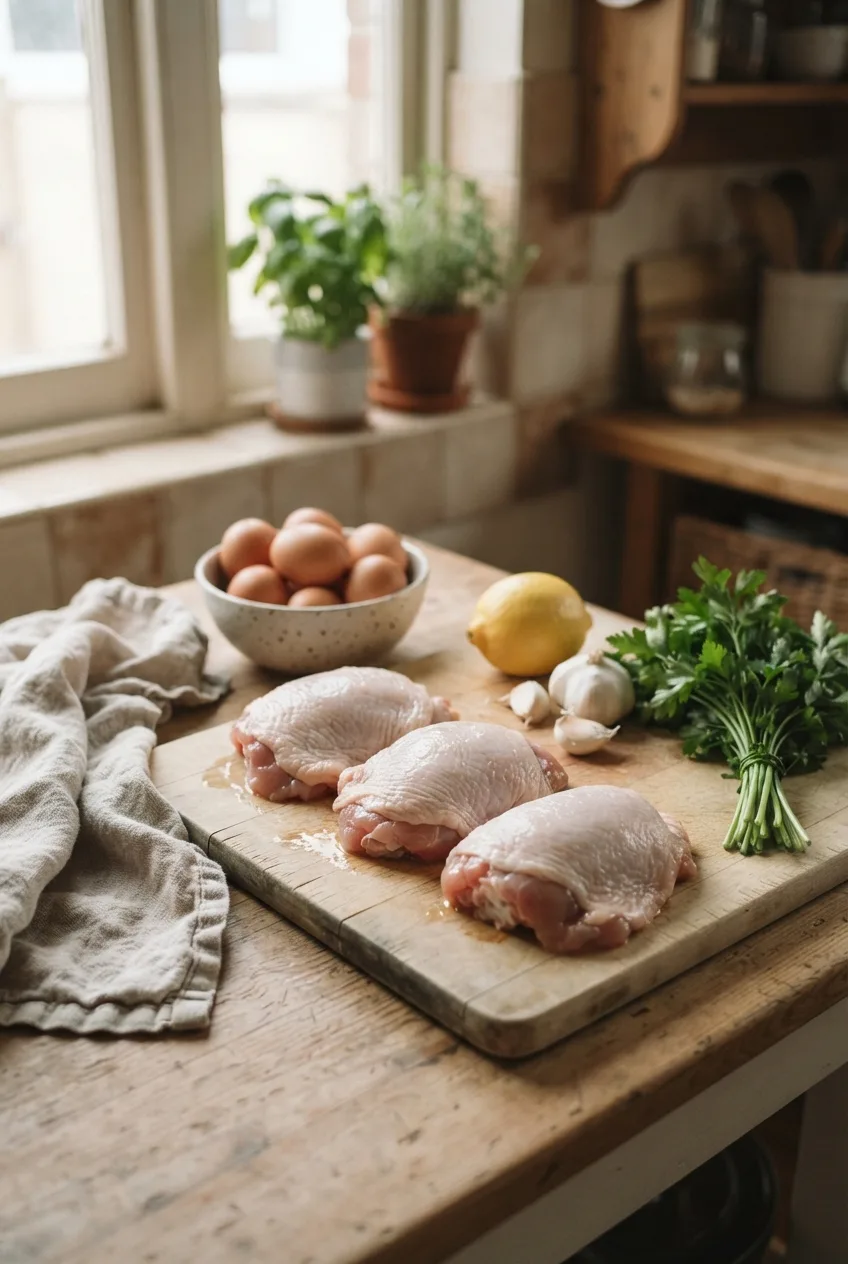
Some protein foods carry a useful amount of potassium. Sockeye salmon, lean beef, lentils and black beans all sit somewhere between 355 and 436 mg per 100 grams. Plain low-fat yogurt is around 234 mg.
Eggs, despite their reputation, are not one of them. About 126 mg per 100 grams, which is roughly 63 mg in a large egg. Eat them for every other reason.
Potassium-rich foods can be part of the picture. There is one thing to know first.
If you take an ACE inhibitor, an ARB, or a potassium-sparing diuretic, check with your doctor or pharmacist before using a potassium-based salt substitute. The combination can push potassium higher than is safe. This is about the substitutes sold as "lite salt" or "low-sodium salt", not about eating ordinary food. Herbs, lemon, garlic, pepper and vinegar do the same job for flavor, with none of that to think about.
On dairy: the DASH eating plan, which was built specifically for blood pressure, includes two to three servings of fat-free or low-fat dairy a day. It's worth knowing that DASH was tested as a whole pattern, fruit and whole grains and all, not as a dairy rule you can lift out on its own.
In the longer-term observational data, total dairy showed a small inverse association with high blood pressure, and low-fat and full-fat did not differ meaningfully. Nobody has tested how any of that behaves on a low-carb plate.
Simple steps
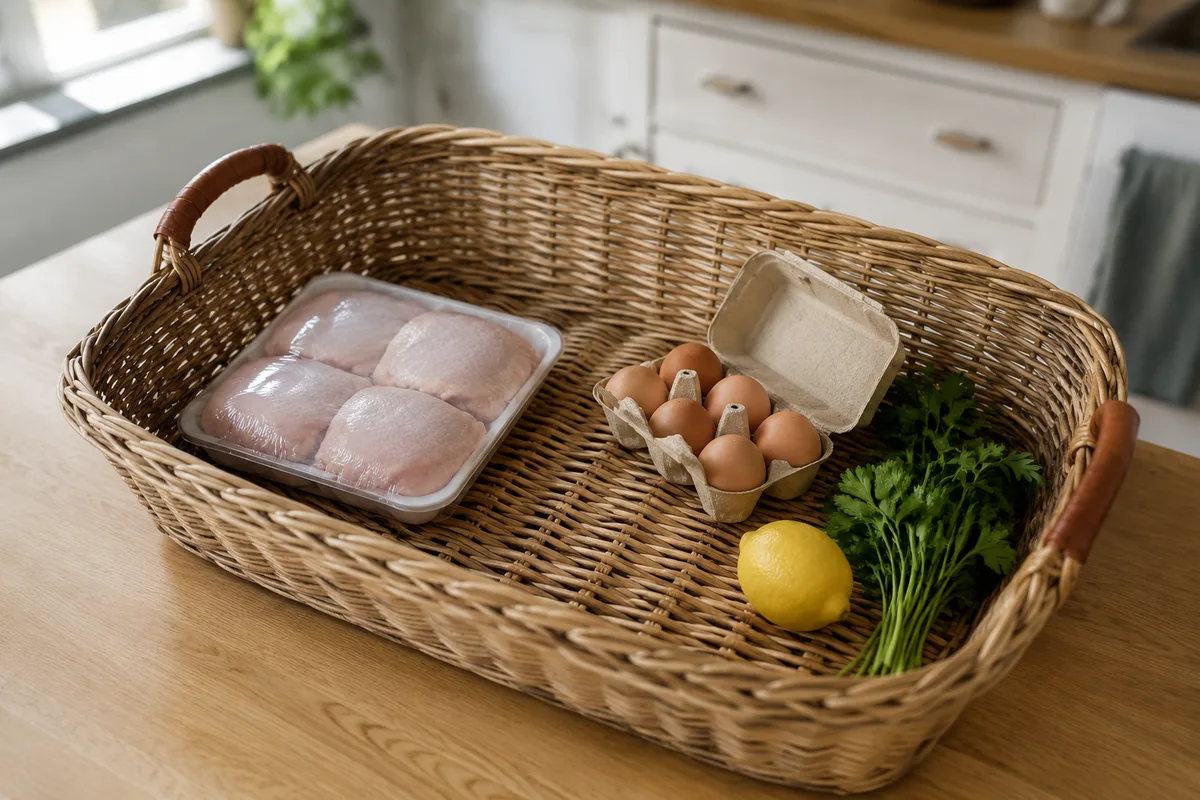
The point of all this is to stop the nightly decision, not to add a new thing to get right.
- Pick two default proteins for the week. Not seven. Two things you genuinely like, from the easy everyday group. Chicken thighs and eggs. Ground beef and canned sardines. Whatever you'll actually cook.
- Buy them plain. Unmarinated, unbreaded, unsmoked. That single habit does more for the sodium in your week than any amount of label-reading later.
- Move the convenient protein to the edges. If bacon and deli meat are most days at the moment, make them some days. You don't have to give anything up.
- Turn one packet over this week. Just one, whichever protein you buy most often. Compare its per-100-gram sodium to the 61 mg in cooked salmon and you'll know where you stand.
- Season it yourself. Garlic, lemon, pepper, herbs. When you add the salt, you control how much of it there is.
Common Questions About Protein and Blood Pressure
Is red meat bad for blood pressure?
Fresh, unprocessed red meat is low in sodium: grilled lean beef measures about 75 mg per 100 grams. In long-term observational studies, higher red meat intake was associated with a slightly higher chance of developing high blood pressure. That is an association, not a cause, and it rests on weaker evidence than the sodium figures.
Is bacon off the table?
No. Bacon is where sodium adds up fastest, at about 2,190 mg per 100 grams for baked bacon, against 61 mg for cooked salmon. If it is on your plate most days, that is where the sodium in your protein is coming from. Move it to some days, keep plain proteins as your defaults, and check the packet.
How much protein should I eat for blood pressure?
There is no number an article can give you, and protein is not a lever for your readings anyway. In trials that swapped some carbohydrate for protein, blood pressure moved by a little over 1 mmHg. Eat enough to feel full and keep meals simple. If you have kidney disease, ask your doctor or a renal dietitian first.
Next step
If you take blood pressure medication, let your doctor know you are making this change. Cutting carbs can lower blood pressure on its own, and they may want to keep a closer eye on your readings for a while. If you feel lightheaded or dizzy, tell them. That is something to report, not a sign it is working.
For the rest of the plate, the pillar page on low-carb foods that support healthy blood pressure has the full grocery list. If vegetables are the next thing you're unsure about, start with the best low-carb vegetables for blood pressure. And if convenient protein between meals is where yours is creeping in, low-sodium keto snacks covers that directly.
Two recipes that use the easy everyday proteins, if you want somewhere to start tonight: chicken thighs with creamy garlic spinach and sardine salad with olive oil and lemon.
And if you would like to work out where to start, try the free 60-second blood pressure check. It ends with a short plan of your own, and the Blood Pressure Support Cheat Sheet comes with it.
I write from my own experience of living with high blood pressure, not as a medical professional. Nothing here is medical advice, and nothing here should replace what your own doctor tells you. Please talk to them before making changes, especially if you take medication.