
Articles
Low-Carb Stuffed Peppers with Ground Turkey
Stuffed peppers are usually held together by rice. This version leaves the rice out and lets mushrooms and ground turkey do that job instead, which keeps the carb load down and the flavor up.
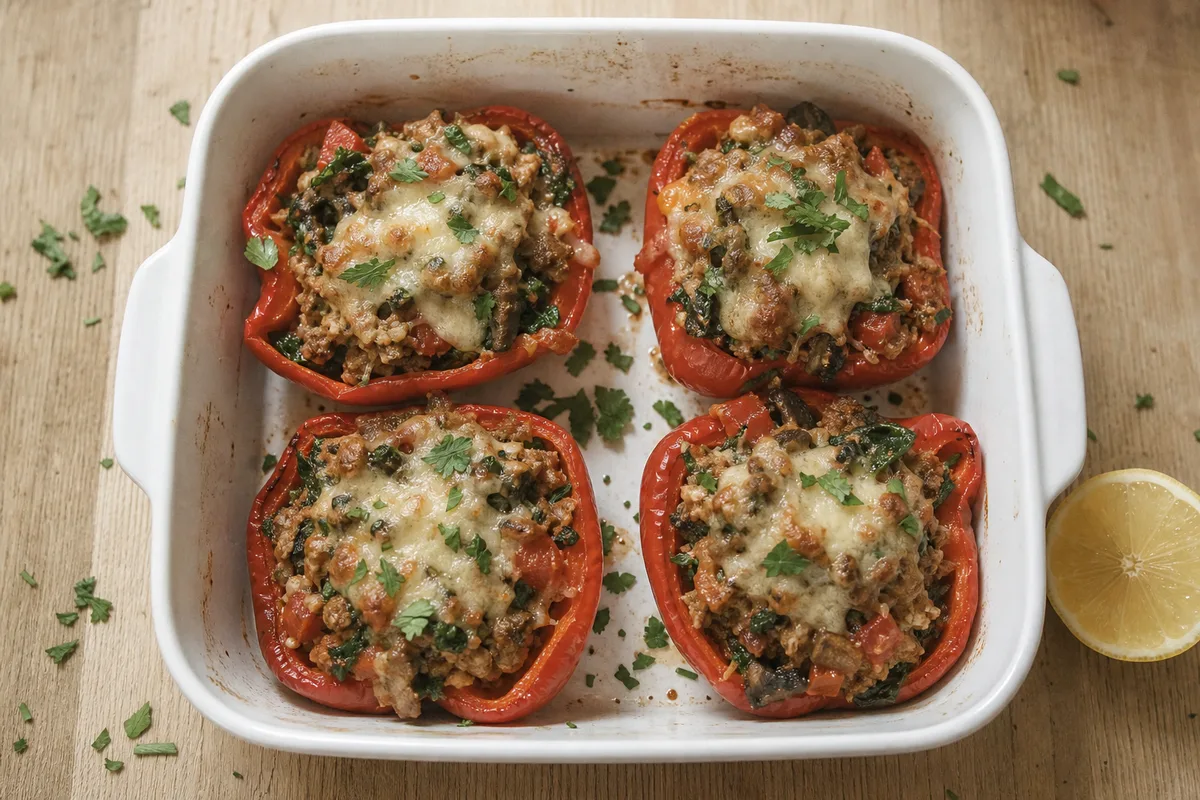
It is one skillet, one baking dish, and it reheats well enough to be Tuesday's lunch.
This is general information about food, not medical advice. If you take blood pressure medication or have kidney disease, your sodium and potassium targets are set by your doctor, not by a recipe page.
Why This Recipe Works
Three things are doing the work here.
The peppers and the filling are both built from whole vegetables, so the carbohydrate that would normally come from a cup of rice simply is not in the dish. What is left is the natural sugar in the peppers, onion and tomatoes, and about a third of that is fiber.
The flavor comes from garlic, oregano, cumin, paprika and a squeeze of lemon at the end, rather than from salt. That is the whole trick. Acid and warm spice read as "seasoned" on the tongue, so the dish does not taste flat even though the added salt is optional. This is what supporting a lower-sodium eating pattern actually looks like on a plate, rather than in theory.
And it provides potassium-rich ingredients without anyone having to think about it. Red peppers, mushrooms, spinach and tomatoes are all high-potassium foods, and there are four of them in one dish.
A note that matters if you take medication for blood pressure: some medicines, including ACE inhibitors, ARBs and potassium-sparing diuretics, change how your body handles potassium. This is a normal meal made of normal food, but if you have been told to watch your potassium intake, or you have kidney disease, talk to your doctor or pharmacist about how much fits your situation. And do not reach for a potassium-based salt substitute to season this without asking them first, because those products deliver a much larger and more concentrated dose than food does.
If you are also looking at what to eat between meals, see low-sodium keto snacks.
Sodium in Context
Each serving contains about 220 mg of sodium, with the optional salt left out.
Plainly: that is roughly 10 percent of the 2,300 mg daily limit used on US Nutrition Facts labels, and about 15 percent of the 1,500 mg the American Heart Association describes as the ideal target for most adults. For a full dinner, that is a small share of the day.
Where it comes from matters more than the number. Almost half of the sodium in this dish, 409 mg of 874 mg across the whole tray, is the 60 g of mozzarella. The turkey accounts for another 345 mg. The vegetables, the spices and the lemon juice together contribute under 120 mg for the entire recipe. That is what happens when flavor is built from herbs and acid instead of salt.
If you stir in the optional half teaspoon, the per-serving figure goes to about 511 mg, still under a quarter of the 2,300 mg label limit.
This is a description of the food, not a recommendation about your intake. Sodium targets are personal, and they depend on your medication, your kidney function and your history.
Potassium matters here too, not just sodium. If you are new to how the two work together on a low-carb plan, start with electrolytes on low-carb.
For the wider picture on how this fits a low-carb routine, read how low-carb affects blood pressure.
Substitutions
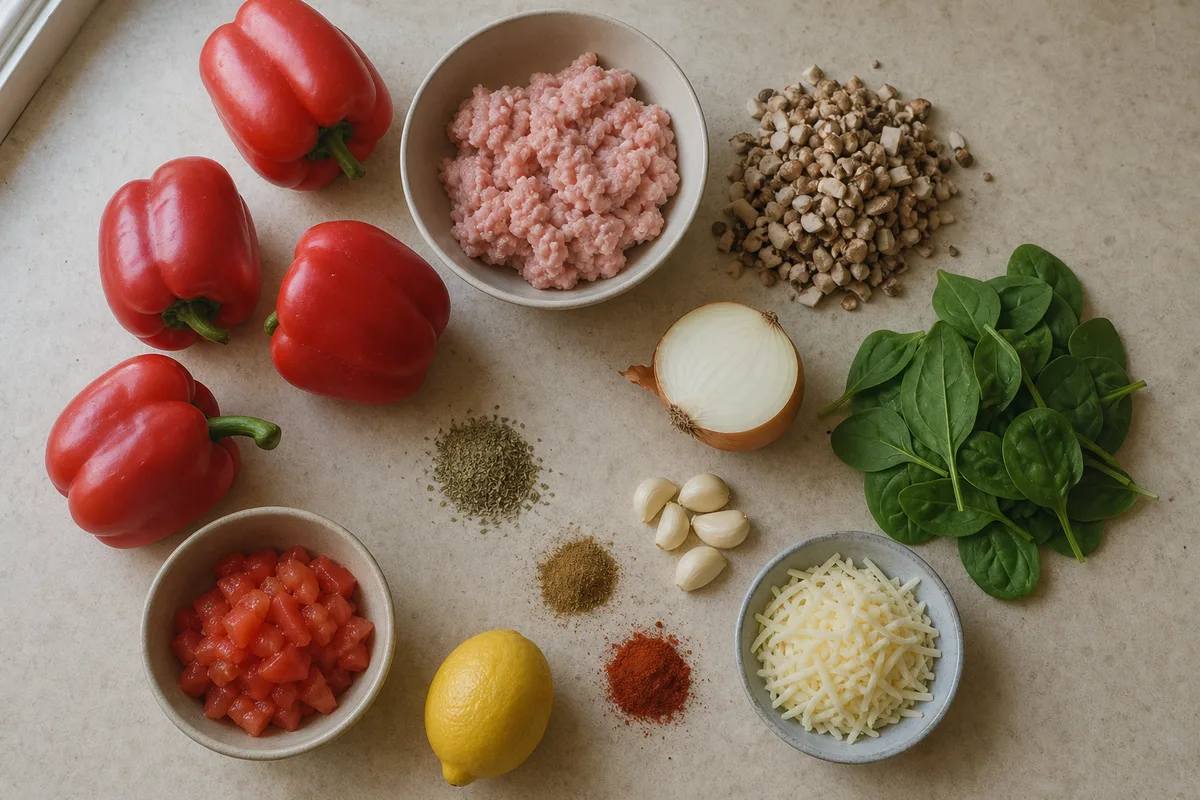
- Ground chicken or lean ground beef instead of turkey. Both work. Ground beef will be richer and will need draining after browning.
- Green, yellow or orange peppers instead of red. Red are the sweetest and highest in potassium, but any color holds up to baking. Green peppers stay firmer, so give them an extra 5 minutes in the first bake.
- Any firm mushroom for the cremini. Button, portobello, or a mix. Chop them small; they are standing in for the rice, so texture matters.
- Kale or chard for the spinach, stems removed and shredded. Add them with the tomatoes rather than at the end, since they need longer to soften.
- Lime for lemon. Same job, slightly different accent, works well with the cumin.
Substitutions That Change the Sodium
- Skip the mozzarella entirely. The cheese is the single biggest source of sodium in the dish. It contributes 409 mg of the 874 mg total, so leaving it off drops the per-serving sodium from about 220 mg to about 116 mg. The tops will not brown; brush them with a little extra olive oil instead.
- Feta or parmesan instead of mozzarella. Both are considerably saltier than part-skim mozzarella gram for gram. If you swap, use half the weight and check the sodium on the pack.
- Regular canned tomatoes instead of no-salt-added. This is the substitution most likely to catch you out. Salted canned tomatoes vary widely by brand, and 200 g of them can carry several hundred milligrams of sodium on its own. Read the label on the can you actually buy. The figures here were calculated with a no-salt-added product.
- The optional half teaspoon of salt. If you stir it in, it adds about 291 mg of sodium per serving, taking the total to roughly 511 mg. It is listed separately so you can see exactly what you are adding rather than guessing.
Serving Size
One serving is two stuffed pepper halves, which is one whole pepper's worth. The recipe makes eight halves from four large peppers, so it serves four as a main meal.
If you are serving it alongside something else, a big green salad with olive oil, or cauliflower mash, one half per person turns it into eight smaller portions. The nutrition figures are per serving of two halves, so halve them if you serve it that way.
Storage and Reheating
Cool the peppers to room temperature within an hour of coming out of the oven, then refrigerate in a covered container. They keep for 3 to 4 days.
They are better suited to the fridge than the freezer. Peppers hold a lot of water and go soft and weepy after thawing. If you do want to freeze, freeze the cooked filling on its own in a flat bag for up to 3 months, and bake fresh peppers when you want to eat it.
Reheating
- Oven, best result. 350F (180C) for 15 to 18 minutes, covered with foil for the first 10 so the pepper does not dry out.
- Microwave, quickest. One serving on medium power for 2 to 3 minutes, covered, stopping halfway to turn the plate. The pepper will be softer than it was on day one.
- Skillet, if the pepper has gone floppy. Scoop the filling out, warm it in a dry pan for 4 minutes, and eat it as a hash. No shame in it.
Reheat once, and heat it through properly to steaming.
Variations
- Italian. Swap the cumin and paprika for 2 tsp dried basil and a pinch of chili flakes. Finish with fresh basil instead of parsley.
- Mediterranean. Add 40 g chopped pitted olives to the filling and finish with lemon zest. Olives are salty, so if you add them, leave out the optional salt and consider halving the cheese.
- Southwest. Keep the cumin, add 1 tsp dried cilantro and finish with fresh cilantro and lime. Half an avocado sliced over the top adds potassium and healthy fat.
- Extra vegetables. 100 g grated zucchini stirred in with the tomatoes stretches the filling without changing the flavor. Squeeze the water out of it first.
- Dairy free. Leave the cheese off and top with 2 tbsp nutritional yeast mixed with 1 tbsp olive oil in the last 5 minutes of baking.
For more dinner ideas built the same way, see low-carb meal ideas that support healthy blood pressure.
Common Questions About Low-Carb Stuffed Peppers
Can I make these ahead?
Yes, and they are better for it. Cook the filling up to 3 days ahead and keep it covered in the fridge. Bake the peppers, stuff them cold, and add 5 minutes to the final bake. You can also fully assemble unbaked stuffed peppers a day ahead and bake them straight from the fridge, adding about 8 minutes.
Do I have to pre-bake the peppers?
Yes, if you want them tender. The filling is already cooked when it goes in, so the second bake is mostly about melting the cheese. Without the first 15 minutes the peppers come out crunchy and the tops overcook while you wait for them.
How many carbs are in one serving?
About 21 g of total carbohydrate with about 6 g of fiber, so roughly 15 g of net carbs per serving of two halves. Most of that is the peppers themselves. That fits a low-carb eating pattern for most people, though it is not a strict keto dish.
Why turkey instead of beef?
93 percent lean ground turkey gives you a high-protein filling with less saturated fat than most ground beef, and it takes on the oregano, cumin and paprika readily. Lean ground beef works if you prefer it; drain the fat after browning.
Can I use frozen spinach?
Yes. Use 60 g frozen chopped spinach, thawed, and squeeze it dry hard before adding it, or the filling will be watery and will not sit in the peppers.
Is this suitable if I am on blood pressure medication?
That is a question for your doctor or pharmacist, not for a recipe. What can be said about the food itself is that it is low in added salt and provides potassium-rich ingredients. Whether that fits your particular treatment is a medical judgment, especially if you have been given a potassium restriction or have kidney disease.
Start the 60-Second Blood Pressure Check
If you want a simple reminder of the foods and daily habits that support a low-carb blood pressure routine, try the free 60-second blood pressure check, and the Blood Pressure Support Cheat Sheet comes with it.
Keep it on your phone or print it for the kitchen. It is designed to help you make the next choice without turning food into another complicated project.
Low-Carb Stuffed Bell Peppers with Ground Turkey
Blood-pressure-friendly stuffed peppers built on ground turkey, mushrooms and herbs instead of rice and salt. One tray, four servings, and it fits a low-carb eating pattern.
Ingredients
Peppers
Filling
Topping
Optional
Instructions
Peppers
-
Heat the oven to 200C (400F).
-
Halve the peppers lengthwise and pull out the seeds and the white membrane.
-
Sit the halves cut side up in a large baking dish and pour 3 tbsp water into the base of the dish.
-
Bake the empty halves for 15 minutes, until they have softened at the edges but still hold their shape.
Filling
-
Heat the olive oil in a large skillet over medium heat while the peppers bake.
-
Cook the onion for 4 minutes, stirring, until it turns translucent.
-
Add the mushrooms and cook for 6 minutes, until they release their liquid and the edges start to brown.
-
Stir in the garlic, oregano, cumin, paprika and black pepper and cook for 1 minute, until fragrant.
-
Add the ground turkey and break it up with a spoon, cooking for 6 to 7 minutes until no pink remains.
-
Pour in the tomatoes and simmer for 5 minutes, until the mixture looks thick rather than wet.
-
Stir through the spinach and cook for about 1 minute, until it wilts down.
-
Take the pan off the heat and stir in the lemon juice. Taste, and stir in the optional salt now if you are using it.
Assemble and bake
-
Spoon the filling into the eight pepper halves, mounding it slightly.
-
Scatter the mozzarella evenly over the tops.
-
Bake for 18 to 20 minutes, until the peppers give easily to a knife and the cheese is melted and lightly browned.
-
Rest for 5 minutes before serving, and scatter with parsley if you are using it.
Nutrition per serving
Calculated per ingredient from USDA FoodData Central. Values vary with brands and preparation. This is general information, not a personal target - if your doctor has given you a sodium or potassium target, follow that instead.
Low-Carb Stuffed Bell Peppers with Ground Turkey, from Low Carb For Blood Pressure, lowcarbforbloodpressure.com/low-carb-stuffed-peppers/
General information, not medical advice. Low-carb eating can affect blood pressure and fluid balance, and it can interact with blood pressure medication. Talk to your doctor or pharmacist before making a significant change to how you eat, especially if you take prescribed medication or manage another health condition.