

Articles
How Much Sodium Do You Really Need on Low-Carb?
Advice about sodium on low-carb can leave you wondering which way to turn. One source says to watch your salt because of your blood pressure. Another says to add more as soon as you cut carbohydrates. This guide explains what the numbers mean and how to make that conversation more useful for your own situation.
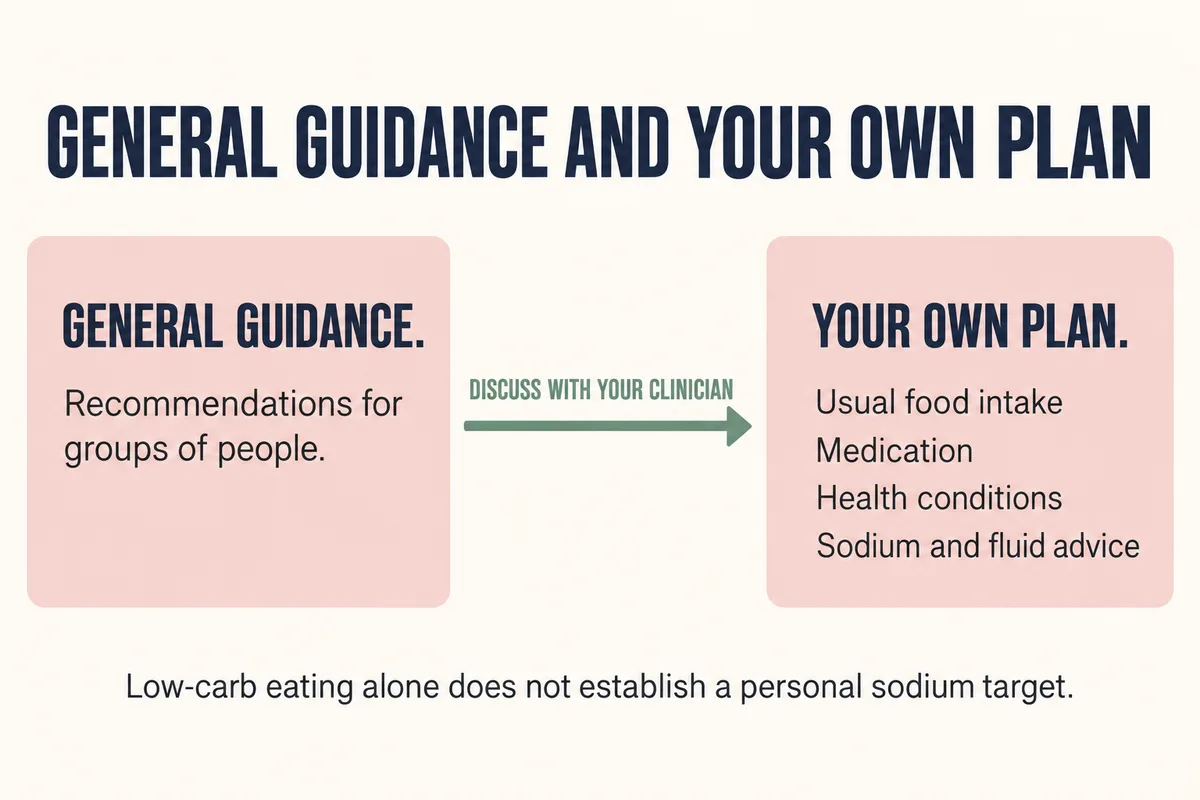
There is no single extra-sodium amount that everyone needs simply because they eat low-carb. Your existing food intake, health conditions and treatment matter. If you manage high blood pressure, talk with your doctor or dietitian before making a substantial change to sodium.
How much sodium on low-carb is enough?
For a useful reference point, the American Heart Association's sodium guidance recommends no more than 2,300 mg daily, with an optimal goal of no more than 1,500 mg for most adults.
These are US population recommendations, not a personal prescription or a low-carb replacement formula. They refer to total sodium from food and drinks, including salt added in cooking. They do not mean adding that amount on top of what you already eat.
If you already have an individual sodium or fluid plan, bring it to the discussion about changing your diet. Kidney disease and heart failure need individualized advice from your healthcare team.
A more useful question than “Which internet number should I follow?” is: “Does my current sodium guidance still fit the way I am eating and the treatment I receive?”
Why low-carb salt advice can sound different
Early in a ketogenic diet, the kidneys can release more sodium and water. That helps explain why salt replacement appears in some low-carb advice. It does not establish how much extra sodium any one reader needs.
A 2025 review in Frontiers in Nutrition on symptoms during ketogenic diet initiation describes these changes, but also reports limited clinical evidence for electrolyte supplements as a way to relieve early symptoms. The authors did not find studies directly establishing that measured electrolyte losses caused the symptoms reported.
That distinction matters. A possible explanation is not a diagnosis. Research on starting a strict ketogenic diet also cannot tell us exactly what happens when someone makes a modest reduction in carbohydrates.
So both concerns can be relevant: reducing excess sodium for blood pressure and addressing a clinically assessed loss of sodium or fluid. Which applies depends on the person. If you take blood pressure medication, tell your doctor about your dietary change so they can advise on monitoring.
Our broader guide to electrolytes on low-carb introduces the minerals discussed alongside sodium.
Start with the sodium already in your day
Before deciding you need more or less, look at what you are already using. A useful place to start is the food you repeat most often, rather than every ingredient in your kitchen.
Consider a familiar low-carb lunch: chicken, cucumber and salad leaves. Then consider the additions: bottled dressing, cheese, olives, a seasoning blend or a ready-made sauce. Check those labels too. “Low-carb” tells you little about the meal's total sodium.
Too much sodium can also leave you feeling puffy. If that sounds familiar, see water retention and bloating on low-carb.
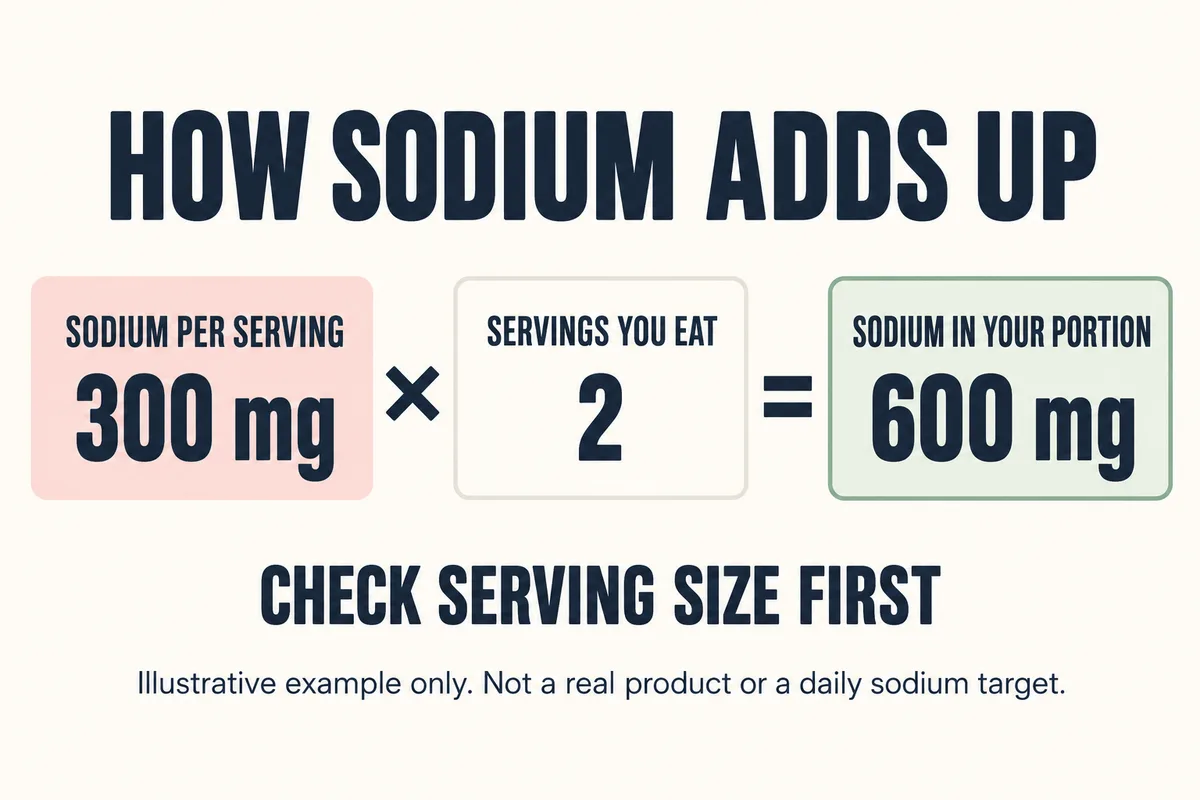
For packaged food, compare the amount per serving with the portion you actually eat. Here is a made-up label example to show the arithmetic, not a claim about a particular food:
- A label lists 300 mg sodium per serving.
- You eat two servings.
- That portion contributes 600 mg sodium.
Use the same method for sauces, broth and drink mixes. If one label uses milligrams and another uses grams, remember that 1 gram equals 1,000 milligrams. Also check whether the label lists sodium or salt; they are not interchangeable amounts.
You could photograph a few labels and note the portions beside them. That gives you something concrete to discuss without creating a complicated daily tracking routine.
For food inspiration alongside the advice you have been given, see these low-sodium snack ideas.
Make the next step specific
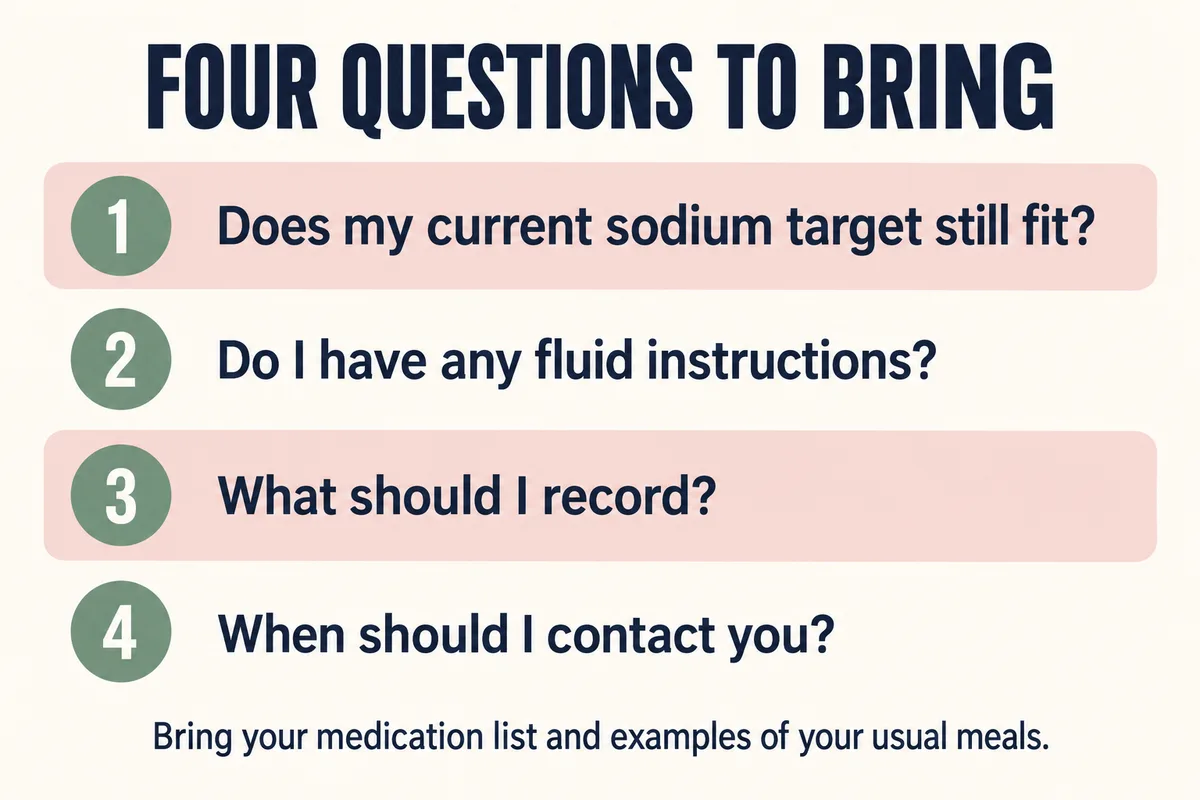
It is easier to work with a short list of questions than a pile of conflicting advice. You might bring these to your next appointment:
- Do I have an individual sodium target, and does it still suit my current eating pattern?
- Are there any fluid instructions I should keep in mind?
- What should I record if I feel different after changing my meals?
- When would you like me to contact you about symptoms or changes in my readings?
Bring a medication list and examples of your usual meals. If you already monitor at home, bring the record your clinician has asked you to keep. Our guide to taking blood pressure readings at home explains the measurement routine.
Home readings are worth bringing for another reason. A 2026 review of 23 trials found that cutting back on sodium lowered home blood pressure readings, including morning readings, and not only readings taken at the clinic. The effect was larger in people with high blood pressure. Those trials were not about low-carb eating, so they cannot tell you how much sodium you need. They do suggest a change in sodium can show up in your home numbers, which is why a steady home record gives your doctor something real to look at.
For the shopping part, choose one familiar product to compare this week. Put two versions side by side and check their serving sizes before comparing sodium. You do not need to replace your whole pantry to understand it better.
In the kitchen, try building flavor with lemon, garlic or herbs. For example, you could prepare chicken with lemon and parsley, then serve it with cucumber and a dressing you measure yourself. This is a meal idea to adapt to your plan, not a calculated low-sodium recipe.
What about electrolyte drinks?
An electrolyte drink is not an automatic requirement of low-carb eating. Before adding one, take its ingredient list and serving information to your doctor or pharmacist. A product name or a “keto” label cannot tell you whether it suits your treatment.
Pay particular attention to products containing added potassium, including potassium-based salt substitutes: if you take an ACE inhibitor, an ARB or a potassium-sparing diuretic, or have kidney disease, check with your doctor or pharmacist before using them. The NIH guidance on potassium and medication interactions explains why these combinations can allow potassium to rise too high.
You can take a photograph of the container to the appointment. Include the back label and the amount you intended to use, so the discussion is about the actual product.
Common questions about sodium on low-carb
Does eating low-carb mean I should add salt?
Not automatically. Starting a ketogenic diet can affect sodium and water loss, but that does not give everyone the same replacement need. If you have high blood pressure, ask your doctor how your current sodium guidance fits your dietary change before adding salt as a daily routine.
Should I count only the salt I add at the table?
No. The sodium already present in foods and drinks contributes too. For a useful food record, include packaged ingredients, sauces and the amounts you use. You can begin with the meals you repeat most often, rather than trying to reconstruct every meal you have ever eaten.
Does dizziness mean I need more sodium?
Dizziness alone cannot identify a sodium shortage. Contact your clinician about new, persistent or recurring dizziness, especially when you take blood pressure medication. Note when it happens and any recent dietary changes. Our guide to dizziness on low-carb gives broader context; it does not diagnose the cause.
What if two professionals have given me different advice?
Ask them to help you reconcile it. Bring the written recommendations, your medication list and a description of how your eating has changed. Ask which guidance applies to your current situation and who will review it. You should not have to choose between unexplained instructions on your own.
Do I need to track sodium forever?
That depends on the plan you have agreed with your healthcare team. A short food record may be enough to start a useful conversation, while some people are asked to monitor more closely. Ask what to record, for how long, and what your clinician wants to learn from it.
Keep a simple guide beside your meal plan
If you would like a practical reference for everyday food and habits, try the free 60-second blood pressure check. The Blood Pressure Support Cheat Sheet comes with it. Keep it alongside the individual advice from your healthcare team, with space for the questions you want to ask next.
This article is general information, not medical advice. Talk to your doctor or pharmacist before making a significant change to your eating pattern or sodium intake, especially if you take prescribed medication or manage another health condition.