
Articles
Can Low-Carb Help Lower Water Retention and Bloating?
It can help with one and not always the other. Cutting carbs usually lets go of some water your body stores alongside carbohydrate, so puffiness can ease in the first week or two. A bloated stomach is a different thing. Low-carb can improve it, leave it the same or make it worse, depending on what you eat instead.
That is why advice about water retention and bloating on low-carb feels so mixed. This page sorts out which is which, and what to try.
Water Retention and Bloating Are Not the Same Thing
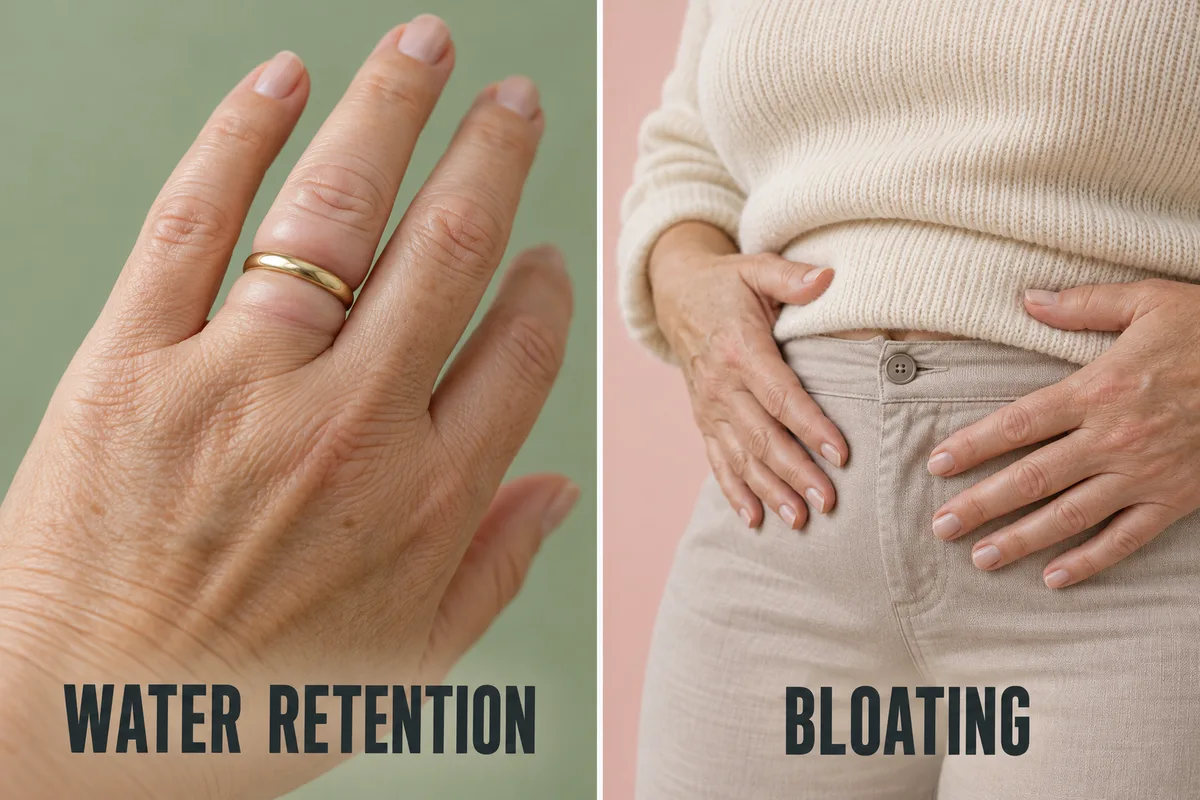
We tend to say "bloated" for both. They are different, and they need different answers.
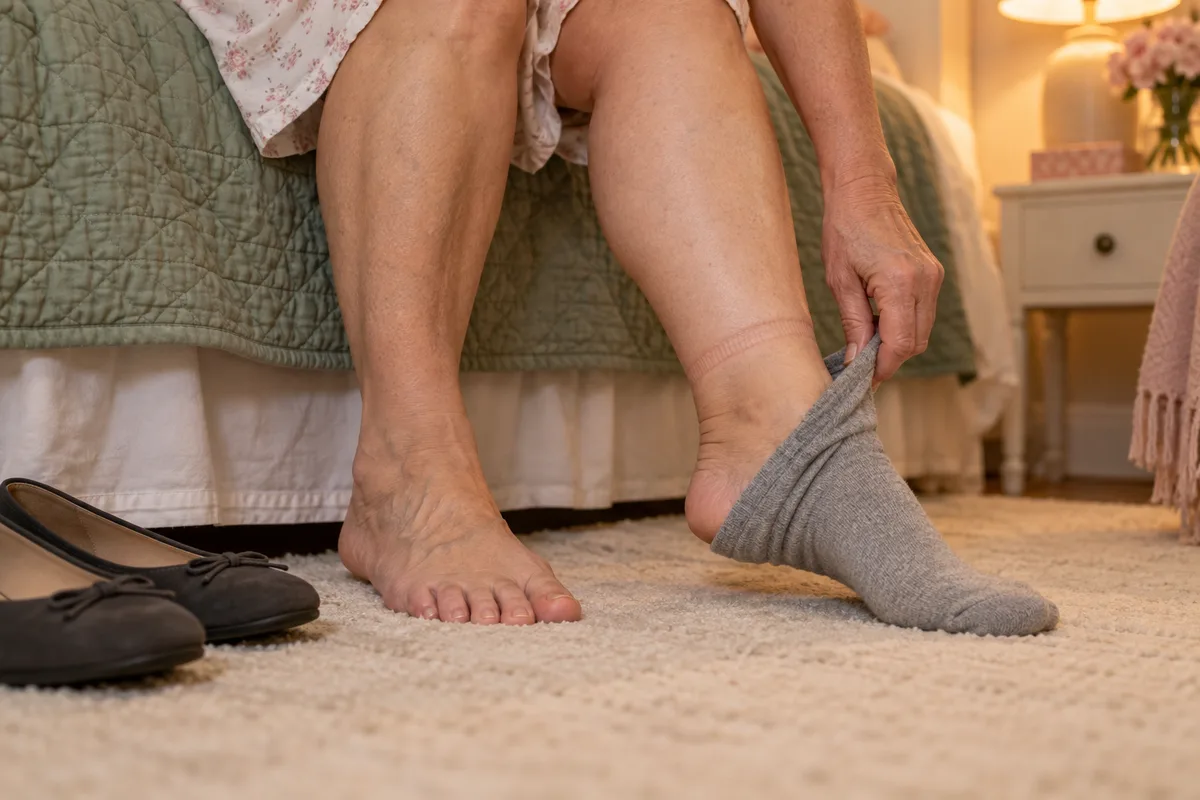
- Water retention is fluid held in your body's tissues. You notice it as puffy ankles, feet or fingers. Sock marks. A ring that is suddenly tight.
- Bloating is a feeling of fullness or pressure in your belly, often after eating. Your waistband feels tight even though nothing else has changed.
You can have both at once. It helps to notice which one you mean before you change anything.
One thing is worth knowing if you manage high blood pressure. The NHS page on swollen ankles, feet and legs lists salty food, sitting or standing for a long time, and some blood pressure medicines among the common causes. If your ankles started swelling around the time a tablet was started or changed, that is one to mention to your doctor or pharmacist.
Why Low-Carb Can Shift Water Weight
Your body stores carbohydrate in your liver and muscles, and that store holds water with it. When you eat fewer carbs, the store shrinks and some of that water goes too.
In the first days your kidneys also let go of more sodium, and water follows it. A 2025 review of what happens when people start a ketogenic diet found that the early weight loss is mostly water. That research is on strict keto. A gentle cut in carbs may do less.
So if you feel less puffy in week one, that is real. It is water, not fat, and some of it comes back if the carbs do. It is also not a treatment for swelling that has another cause.
If you take blood pressure medication, let your doctor know you are making this change. That early fluid shift comes on top of what your tablets already do, and they may want to keep a closer eye on your readings for a while. Feeling lightheaded is something to tell them about, not push through. There is more in why you feel dizzy on low-carb.
Why You Can Still Feel Bloated on Low-Carb
Gas is made when the bacteria in your gut break down carbohydrates that were not fully digested. Eating fewer of the foods that set you off can help. But some popular low-carb swaps are on the list of triggers too.
The NIH guidance on food and gas names these, among others:
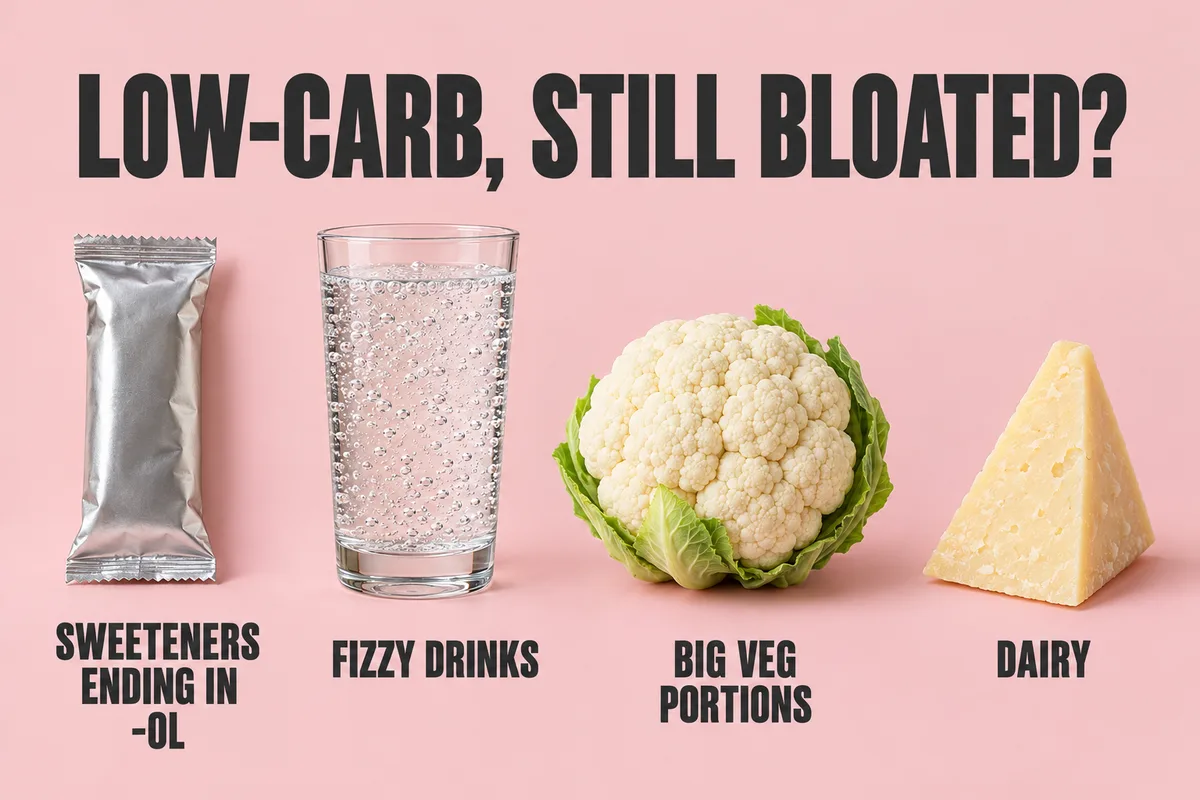
- Sweeteners ending in "-ol", such as sorbitol, xylitol, erythritol and maltitol. They are in a lot of sugar-free bars, gum and sweets.
- Cauliflower, broccoli and kale, especially in the big portions low-carb recipes use.
- Dairy, if lactose does not agree with you.
- High-fat meals, which can make bloating worse.
- Fizzy drinks.
Everyone is different here. A food that bothers you may suit someone else perfectly well.
Constipation is the other common cause. When bread, fruit and beans come out, a lot of fiber goes with them. If you are going less often and your belly feels fuller, look there first. Add fiber-rich foods a little at a time, such as low-carb vegetables, nuts and seeds, and keep drinking through the day. If your doctor has given you a fluid limit, follow that.
Low-Carb Is Not the Same as Low-Sodium
Bacon, deli meats, cheese, stock and bottled sauces all fit a low-carb plate, and all can carry a lot of sodium. The American Heart Association notes that too much sodium can cause water retention, which shows up as puffiness and bloating.
So it is possible to cut carbs and feel puffier. Check sodium on the label separately. A "keto" badge tells you nothing about it.
You will also see advice to add salt or drink electrolytes when you go low-carb. Blood pressure guidance says to limit sodium. Both can be true for different people, so ask your doctor before you add salt. The longer version is in how much sodium you really need on low-carb, and the wider picture is in electrolytes on low-carb.
If you take an ACE inhibitor, an ARB or a potassium-sparing diuretic, or you have kidney disease, check with your doctor or pharmacist before using an electrolyte powder or a potassium-based salt substitute. The NIH explains that these products can push potassium too high for some people.
What to Try This Week
- Name which one it is. Puffy ankles and fingers, or a tight belly after meals? Write it down.
- Read two things on the label. Sodium, and any sweetener ending in "-ol".
- Change one thing at a time. Swap the sugar-free bar for a snack you know suits you, and give it a few days.
- Add fiber slowly. One extra serving of vegetables, not five.
- Do not go by the scale alone. How your belly feels and how your shoes fit tell you more.
Take your notes to your next appointment. They make the conversation much easier.
When Swelling Needs a Check
Swelling that stays, or keeps coming back, is not something to manage by cutting more carbs. Book in with your doctor, especially if you have a heart or kidney condition.
The NHS advises getting seen quickly if the swelling is in one ankle, foot or leg and you do not know why, or if the swollen area is red or hot to the touch. Call emergency services if you are short of breath or your chest feels tight, heavy or painful.
Belly symptoms count too. If they change suddenly, or come with pain, diarrhea or weight loss, talk with your doctor.
Common Questions About Low-Carb, Water Retention and Bloating
Is the weight I lose in the first week of low-carb just water?
Mostly, yes. Research on people starting a ketogenic diet found the early loss is mainly water, because the body lets go of stored carbohydrate and sodium. It is not fat loss, and some of it returns if you eat more carbs again. A gentle cut in carbs may shift less.
Should I take electrolytes for bloating or swelling?
An electrolyte drink is not a treatment for either. Many contain sodium, potassium or both. If you take blood pressure medication or have kidney disease, show the label to your doctor or pharmacist before you use one. Swelling that does not settle needs a check, not a supplement.
Does losing water weight mean my blood pressure is better?
The scale cannot tell you that. Only your readings can, taken the same way each time and looked at by your doctor. If you check at home, keep the record they asked for. The routine is in how to monitor blood pressure at home.
A Simple Next Step
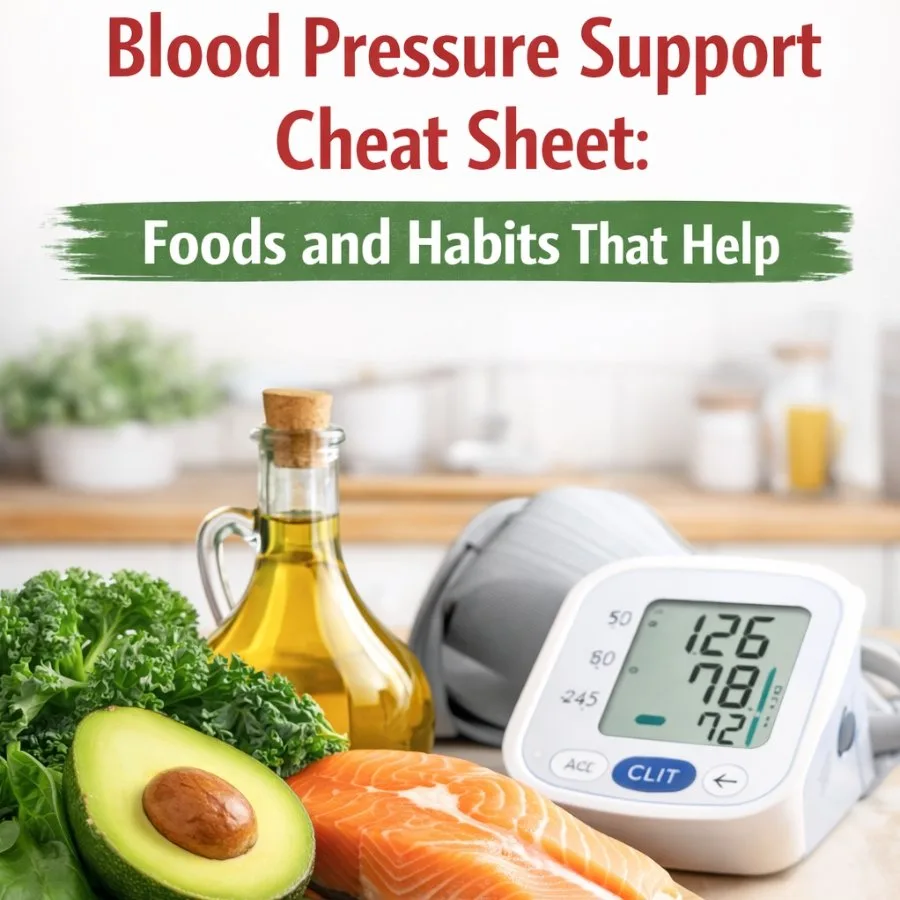
If you would like something simple to follow, try the free 60-second blood pressure check. It ends with a short plan of your own, and the Blood Pressure Support Cheat Sheet comes with it. Keep it alongside the advice from your own doctor.
This article is general information, not medical advice. Low-carb eating can affect blood pressure and fluid balance, and it can interact with blood pressure medication. Talk to your doctor or pharmacist before making a significant change to how you eat, especially if you take prescribed medication or manage another health condition.