
Articles
How to Grocery Shop for a Low-Carb Blood Pressure-Friendly Diet
Low-carb grocery shopping for blood pressure gets tricky in the middle of the supermarket, not at the start. You put the bread back, choose a yoghurt without added sugar and walk past the biscuits. Then you reach the sauces and start wondering.
Is the low-carb dressing a good choice? What about the ready-cooked chicken? Does "reduced sodium" mean the stock is actually low in salt?
This is where a list of approved foods stops helping. You need to know how to choose between the products in front of you, and how those choices will come together in a meal.
The aim is not a trolley full of the lowest-carb product in every aisle. It is food that fits your carbohydrate needs without overlooking sodium, fibre, fat quality, or the practical business of getting dinner on the table.
Let's walk through those decisions, aisle by aisle.
Low-carb and blood-pressure friendly are not the same thing
A meal can contain very little carbohydrate and still lean heavily on salty processed meat, cheese and bottled sauces. Removing the bread does not remove the sodium from everything that went inside the sandwich.
The evidence points at the whole eating pattern. In the DASH-Sodium research described by the National Heart, Lung, and Blood Institute, reducing sodium lowered blood pressure, and combining lower sodium with the DASH eating pattern helped more than either change alone. DASH is not a ketogenic diet, so this does not prove every low-carb menu will do the same.
What replaces the carbohydrate matters too. In the OmniHeart randomised trial, swapping some carbohydrate for protein or unsaturated fat, within an otherwise heart-healthy diet, produced further blood pressure improvements. Again, that was a controlled trial diet, not strict keto.
The practical lesson is simple: keep the carbohydrate reduction, but give equal attention to the foods taking its place.
Our guide to low-carb foods that support healthy blood pressure covers the broader food choices. Grocery shopping is where you turn those choices into meals you can eat again and again.
Start with meals, not a trolley full of good intentions
"Buy more vegetables" is a good intention. "Buy broccoli to roast with chicken, and spinach for tomorrow's eggs" is a plan.
Choose a few meals with overlapping ingredients rather than seven completely different dinners. The simple low-carb meal plan for high blood pressure is a good place to pick from. Choose the ones that suit your appetite, budget and cooking time.
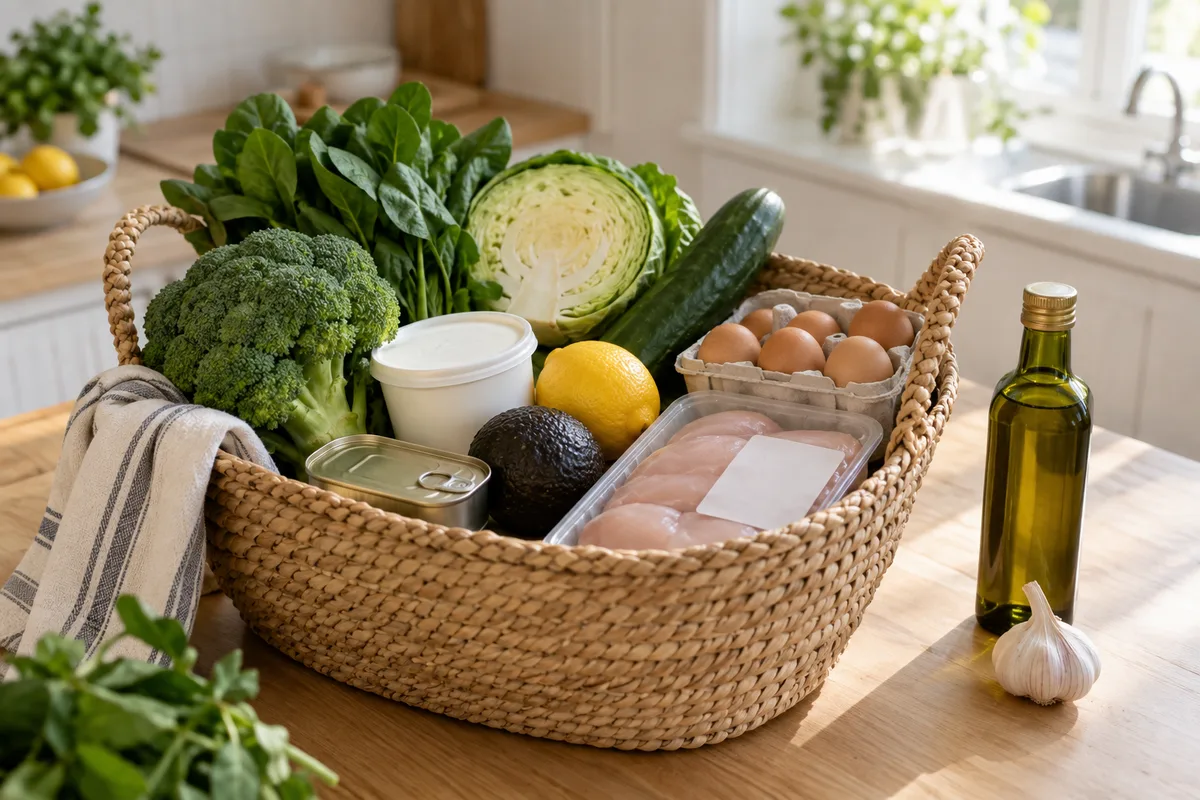
Here is how a small basket can stretch. Suppose you buy plain chicken, eggs, a lower-sodium tin of fish, broccoli, cabbage, cucumber, spinach, plain yoghurt, avocado and a lemon. At home you already have olive oil, garlic and dried herbs.
- The chicken and broccoli become dinner. Cook a little extra and refrigerate it safely for another meal.
- The cabbage and cucumber become a crunchy side salad with yoghurt, lemon and herbs.
- The eggs and spinach give you a fast breakfast, or the start of our 10-Minute Low-Carb Breakfast Plate.
- The tinned fish covers a lunch when you do not want to cook.
- The avocado goes with the eggs, the chicken, the fish or the salad.
That is far more useful than a checklist of 75 "approved foods". You do not need every vegetable, six kinds of nuts or four low-carb flours. You need enough to make the meals you are actually planning.
Also plan for the evening when you will not feel like cooking. Eggs and frozen spinach, or a tin of lower-sodium fish and a cucumber, can be a five-minute meal. That backup deserves a place in the trolley as much as the dinner you are excited about.
In the produce section, buy vegetables you know how to use
Non-starchy vegetables give you fibre, vitamins, minerals and volume without much carbohydrate. The American Diabetes Association's list of non-starchy vegetables includes familiar choices such as broccoli, cabbage, cauliflower, mushrooms, cucumber, leafy greens and zucchini. Our list of low-carb vegetables for blood pressure goes further.
Knowing which vegetables are lower in carbs is only half the job. The other half is knowing what you will do with them.
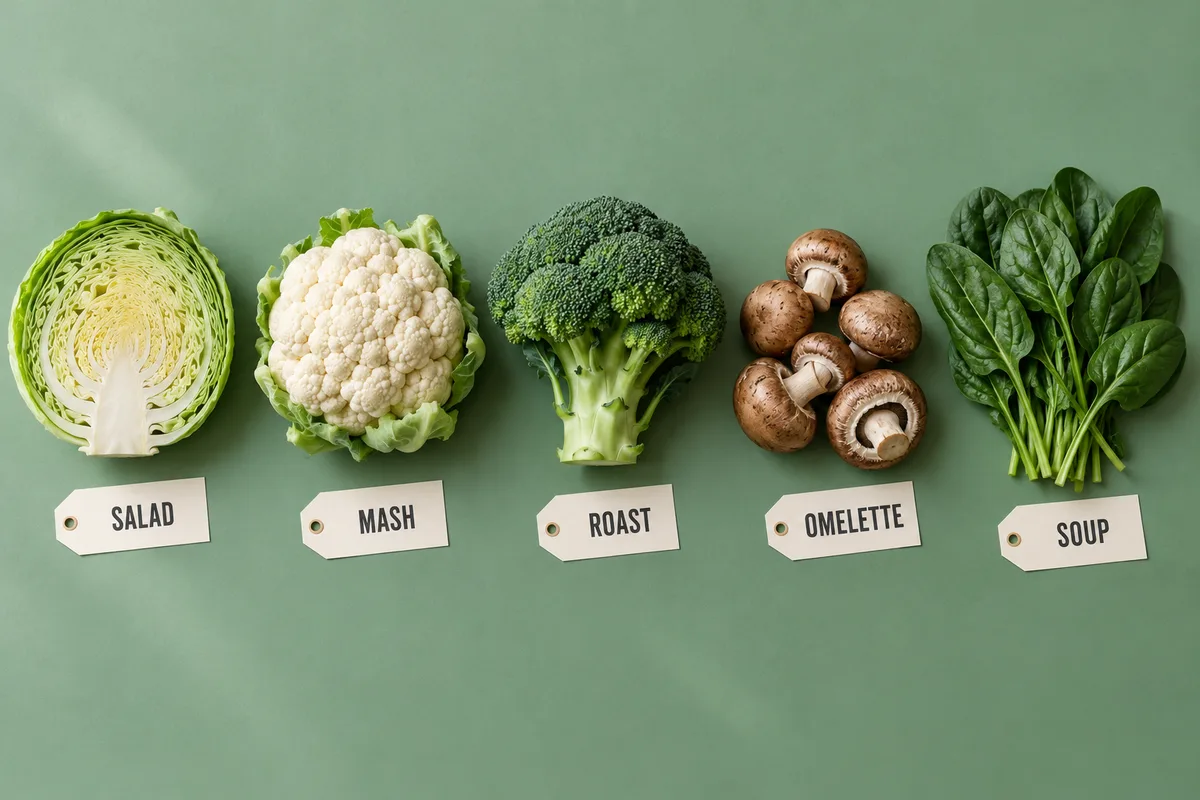
- Cabbage can be a crunchy salad or a warm pan-fried side.
- Cauliflower can be roasted, mashed or turned into cauliflower rice.
- Mushrooms add substance to eggs, chicken or a skillet meal.
- Spinach goes into omelettes, soups and chicken dishes.
- Broccoli can be roasted once and served beside two different meals.
A trolley with only lettuce and cucumber may look healthy, but it can leave you wondering what to serve with a hot dinner three days later.
Give potassium and magnesium a place in ordinary meals
Potassium matters for blood pressure. The American Heart Association explains that potassium-rich foods can help reduce the effects of sodium. Several of them fit comfortably into lower-carb eating: avocado, leafy greens, tomatoes, mushrooms, some fish and plain yoghurt.
If you take an ACE inhibitor, an ARB or a potassium-sparing diuretic, or you have kidney problems, ask your doctor or pharmacist whether adding more potassium-rich foods is right for you.
Magnesium deserves the same attention. The National Institutes of Health magnesium fact sheet lists green leafy vegetables such as spinach, nuts, seeds and legumes among its food sources. In the trolley that can be as simple as pumpkin seeds for a salad, spinach for your eggs and a small bag of unsalted nuts.
The point is not one "blood pressure superfood" eaten every day. It is keeping plant foods in the picture, so low-carb does not quietly become meat, cheese, butter and packaged snacks.
You do not have to ban every carb-containing plant food
Berries, beans and lentils contain carbohydrate, so portions matter. They also bring fibre and minerals. The American Diabetes Association's guide to carbohydrates separates whole-food carbohydrate sources from refined foods and added sugar.
A few berries with plain yoghurt may fit one person's plan. Someone else may add a spoonful of lentils to a big vegetable salad. Unless strict ketosis is your goal, the useful question is: does this portion fit your low-carb approach while helping you build a satisfying meal?
At the meat and fish counter, look beyond the protein
Chicken is not automatically lower in sodium just because it is chicken. The American Heart Association's advice on reducing sodium suggests checking poultry packaging for words like "broth", "saline" or "sodium solution".
Marinated meat works the same way. A tray of lemon-and-herb chicken saves time, but read the sodium figure before assuming it matches plain chicken seasoned at home. You do not have to give up convenience. If two products save the same time and one has much less sodium, the comparison has helped you without making life harder.
For more on this, our guide to the best protein sources for blood pressure compares the main options.
Make processed meat a smaller part of the routine
Bacon, ham, salami, sausages, deli meat and jerky fit easily into a carb count. That does not make them ideal everyday staples. The American Heart Association's guide to picking healthy proteins suggests choosing lean, unprocessed meat and poultry, along with fish, seafood and plant proteins.
A slice of bacon does not ruin a sensible week. Look at the pattern instead. A little bacon to flavour a pan of vegetables is different from bacon at breakfast, ham at lunch, jerky as a snack and sausages at dinner. Low-carb makes processed meat easy to overuse precisely because it has almost no carbs.
Tinned fish is a very useful convenience food
Tinned fish can be a practical lunch or an emergency dinner. Salmon and sardines also bring omega-3 fats, and the American Heart Association recommends eating fish at least twice a week, especially fatty fish.
Compare brands, because sodium can vary a lot between similar tins. "In springwater" describes the packing liquid, not the sodium content, so check the panel. Then buy the tin with a meal in mind. Our Low-Carb Tuna Cucumber Boats turn a tin into lunch in a few minutes.
In the dairy aisle, separate sugar, fat and sodium
One yoghurt says "high protein". Another says "low fat". Another says "no added sugar". A cheese advertises its protein and says nothing prominent about sodium. Those claims answer different questions.
Plain yoghurt: look beyond the word "sugar"
Plain yoghurt naturally contains lactose, a milk sugar, so some sugar on the panel does not mean anything was added. The FDA explains the difference between total sugars and added sugars.
Start by comparing plain, unsweetened yoghurts. Check the carbohydrate in the amount you will actually eat, then compare protein, saturated fat and sodium. The NHLBI DASH eating plan includes low-fat or fat-free dairy, so a lower-fat plain yoghurt is worth considering. That does not mean swapping to a sweetened "diet" yoghurt.
One tub can earn its place several times over: breakfast, a cucumber and herb dip, a garlic dressing, a spoonful beside a spicy meal.
Cheese: buy it with a purpose
Cheese fits low-carb eating, but it creeps. It turns up in the omelette, then the salad, then the snack, then the casserole. Instead of asking whether cheese is "allowed", decide where you enjoy it most. A little feta over a salad may satisfy you more than cheese added to every meal.
Taste is not a reliable sodium guide. The National Kidney Foundation lists cottage cheese among foods that can carry a lot of sodium, even though it does not taste very salty. Compare brands, and if there is no lower-sodium version you like, let portion size do the work.
Choose fats for the whole meal, not just the carb count
When bread, rice and potatoes shrink, it is easy to fill the gap with butter, cream and cheese. That keeps carbs low, but it is not the only way to make a meal satisfying. The American Heart Association's facts on fats suggest replacing saturated fats with unsaturated fats where you can.
Olive oil is the simplest staple. It dresses a salad, coats vegetables for roasting, finishes cooked fish and mixes with lemon, garlic and herbs. Avocado, unsalted nuts, seeds and fatty fish all help too. Butter and cream do not have to disappear. Just notice whether they have become the default every time a meal needs flavour. Cauliflower mash, for example, can be made with olive oil, roasted garlic and herbs instead of cream, butter and cheese together.
Read labels by comparing the amount you will actually eat
You do not need to study every packet for five minutes. You do need a fair comparison.
Start with serving size
A small sodium or carb number can look reassuring until you notice it is for half the amount you normally use. The FDA's guide to the Nutrition Facts label explains that the figures refer to the listed serving, so two servings means twice the nutrients.
Australian and New Zealand labels give you a better tool. Food Standards Australia New Zealand explains the nutrition information panel, which shows both per-serving and per-100-gram columns. When two products use different serving sizes, compare the per-100-gram column so neither looks better just because of a smaller serve.
Put sodium into the context of your whole day
The American Heart Association recommends no more than 2,300 mg of sodium a day, with an ideal limit of 1,500 mg for most adults. That is a population guideline, not a personal target.
There is a real tension here. Blood pressure guidance says reduce sodium. Low-carb eating can also increase the sodium your body lets go of, especially early on. Both can be true for different people, which is why your own doctor is the right person to talk to about how much is right for you. Our article on how much sodium you really need on low-carb looks at this more closely.
What does hold for everyone is that one product's sodium joins the cheese, dressing, stock, olives and seasoning you eat that day. That is why comparison matters.
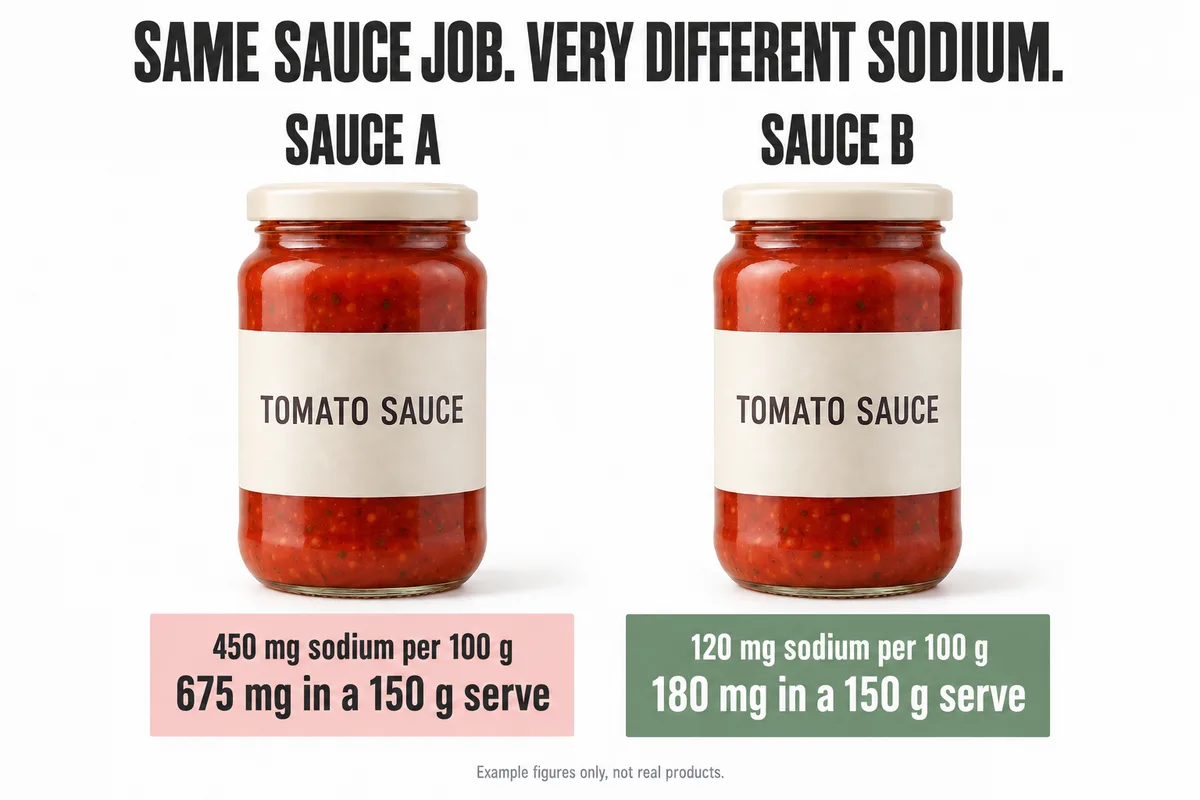
Imagine two tomato sauces. These figures are only an example, not real products. Both contain 5 g of carbohydrate per 100 g. One has 450 mg of sodium per 100 g. The other has 120 mg.
If you use 150 g of sauce, the first gives you 675 mg of sodium. The second gives you 180 mg.
You have not removed the sauce. You have not made the meal smaller. You have not eaten dry chicken in the name of good health. You just chose the version that does the same job with far less sodium. That is what useful label reading looks like.
"Reduced sodium" does not mean "low sodium"
In the United States, "reduced sodium" means at least 25% less sodium than the regular version. The FDA's guide to sodium labelling terms also explains that "no salt added" does not mean a food contains no sodium, and that "low sodium" means 140 mg or less per serving.
Picture a stock with 800 mg of sodium per serving. A reduced-sodium version with 600 mg really has been reduced by 25%. It still contains 600 mg. So do not stop reading at "reduced". Check the number.
Definitions also differ by country. In Australia and New Zealand, FSANZ explains that a food labelled low in salt must contain no more than 120 mg of sodium per 100 g. Another reason to read the panel rather than memorise a number from a website written for another country.
Be careful with "net carb" maths on Australian labels
On US labels, total carbohydrate includes dietary fibre, as the American Diabetes Association explains. Australian and New Zealand panels list fibre separately and generally leave it out of the carbohydrate figure. So following the common American advice to subtract fibre from an Australian carbohydrate number can mean subtracting it twice. For Australian products, start with the panel as printed.
Buy flavour, and watch what finishes the meal
Sometimes the main ingredients are simple, and it is everything added at the end that deserves a look. A chicken salad with seasoned chicken, feta, olives and bottled dressing can add up to far more sodium than any single item suggests. The NHLBI's practical DASH guidance points to convenience foods, sauces and condiments as places to cut sodium.
You do not have to remove every salty ingredient. Decide which one matters most. If feta gives the salad its flavour, make the dressing olive oil, lemon, garlic and herbs. If you use soy sauce in a stir-fry, you may need less of it when ginger, garlic, chilli and lime are also doing the work. Stock deserves special attention because it is used in large amounts, so compare the prepared figure, especially for concentrates and powders.
Then buy the things that make plain food taste good: fresh herbs, dried spices, garlic, lemon, lime, vinegar, ginger, chilli and pepper. The American Heart Association suggests herbs, spices and citrus as ways to rely less on salt. Chicken with lemon, garlic, oregano and olive oil is not "diet chicken". It is just chicken with a different flavour base.
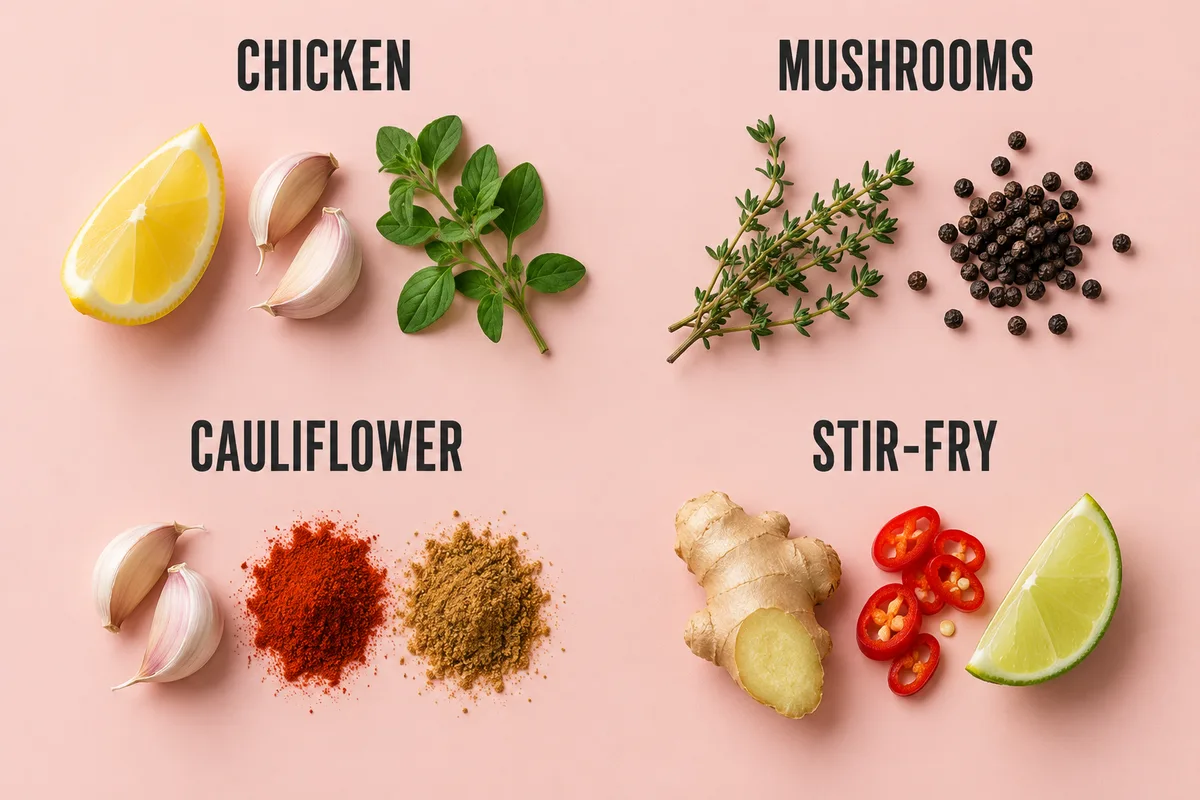
One small caution. Garlic powder and garlic salt are not the same thing, and neither are onion powder and onion salt. Some spice blends are mostly herbs. Others list salt first. The front of the jar can look almost identical, so check the ingredients.
Frozen and canned food both earn their place
The American Heart Association says fresh, frozen and canned produce can all be healthy choices. The real question is what has been added.
- Plain frozen broccoli is just broccoli that lasts longer. Broccoli in cheese sauce is a different product.
- Frozen spinach and cauliflower make omelettes, mash and cauliflower rice easy.
- Plain frozen fish is an emergency dinner. Crumbed fish with a sweet glaze is something else.
- No-salt-added tinned tomatoes make a quick sauce base.
- Tinned beans and legumes can work on a moderate low-carb approach, depending on portion.
Choose no-salt-added or lower-sodium tins where you can. The same AHA page on reducing sodium suggests draining and rinsing canned beans and vegetables to cut some of the sodium. It will not make a very salty product sodium-free, but it helps.
Frozen and canned food is especially useful if fresh vegetables often spoil before you get to them. A vegetable you actually cook does more for you than a beautiful one that ends up in the bin.

Treat packaged keto foods as options, not essentials
You do not need a whole category of special keto groceries. Almond flour, coconut flour, three sweeteners, protein powder, keto cereal, special wraps, bars and electrolyte drinks are all optional.
Some of them can genuinely help. If low-carb wraps stop you buying takeaway at lunch, they are earning their place. If almond flour lets you make something you eat every week, fine. But if you are still struggling to get dinner on the table, a pricey specialist baking ingredient probably will not fix that.
When you do pick up a packaged product, judge it as food, not marketing:
- How much carbohydrate, sodium and saturated fat is in the portion you will eat?
- Does it give you useful fibre or protein?
- Does it solve a real problem for you?
A low carb number does not answer every question. A long ingredient list does not make a food bad either. Salt has one ingredient. Look at the whole product.
Spend first on food that becomes meals: vegetables fresh or frozen, useful proteins, eggs, fish, olive oil, plain yoghurt if you eat dairy, nuts and seeds if you enjoy them, and herbs and flavourings. Add specialist products later, where they make your routine easier.
Read the label on electrolyte powders and salt substitutes
Electrolytes do matter on low-carb, especially when carbohydrate drops sharply and fluid balance shifts. Our guide to electrolytes on low-carb explains why. That does not mean everyone with high blood pressure should buy an electrolyte powder.
If you are looking at one, read what is in it. How much sodium and potassium is in one serve? How many serves a day does it suggest? Is it made for hard exercise, keto dieting or general hydration? The word "electrolyte" on the front does not tell you whether it suits your treatment, so talk to your doctor before adding one if you have high blood pressure.
Some people use potassium-based salt substitutes to cut sodium, but they can be dangerous if you take an ACE inhibitor, an ARB or a potassium-sparing diuretic, or if you have kidney problems. Talk to your doctor or pharmacist before buying one. The National Institutes of Health potassium fact sheet explains that some of these medicines can push blood potassium too high, even at ordinary food amounts.
Keep your doctor in the loop as your shopping changes
Changing the way you eat can affect your blood pressure, so let your doctor know you are making this change. They can keep an eye on your readings with you. Our guide on how to monitor blood pressure at home shows how to take readings consistently so you both have useful information.
If you start feeling lightheaded, do not assume the answer is more salt. Dizziness can come from dehydration, medication, a drop in blood pressure or something unrelated to food. The American Heart Association's page on low blood pressure explains why the cause matters, and our article on why you feel dizzy on low-carb covers the common reasons. Mention it to your doctor.
If you take insulin or other diabetes medicine, talk to your doctor before cutting carbs significantly. Diabetes UK explains why some diabetes medicines need medical support on a low-carb diet. People taking SGLT2 inhibitors need particular care, and NHS guidance for people on SGLT2 inhibitors advises against ketogenic diets while taking them. None of that is a reason to fear buying broccoli instead of bread. It is a reason to have that conversation before a big change.
Common questions about low-carb grocery shopping for blood pressure
Is "no salt added" the same as low sodium?
No. "No salt added" means no salt went in during processing, but the food can still contain sodium naturally or from other ingredients. "Low sodium" is a separate claim with its own limit, and the limit differs between countries. The nutrition panel is the only place to see the real number, so check it before you buy.
Should I subtract fibre from carbs on Australian labels?
Usually not. Australian and New Zealand panels list fibre separately and generally leave it out of the carbohydrate figure already. US labels include fibre in total carbohydrate, which is why American websites tell you to subtract it. Doing that with an Australian label can mean subtracting fibre twice.
Is tinned fish a good choice on a low-carb blood pressure diet?
It can be a very useful one. Tinned salmon and sardines bring protein and omega-3 fats, and they make a quick lunch or backup dinner. Sodium varies a lot between brands, and "in springwater" does not mean low sodium, so compare the panels and pick the lower one.
Are frozen vegetables as good as fresh?
Plain frozen vegetables can be just as useful as fresh, and they often get eaten instead of wasted. What matters is what has been added. Plain frozen broccoli or spinach is a great standby. Vegetables frozen in cheese sauce or seasoning are a different product, so read the label.
Do I need an electrolyte powder on low-carb?
Not automatically. Some people find them useful, but they vary a lot in how much sodium and potassium they contain, and not every formula suits someone with high blood pressure. If you are thinking about one, read the amounts per serve and talk to your doctor first, especially if you take medication.
Next step
A useful low-carb, blood-pressure-friendly grocery shop does not need to look impressive. It needs to give you meals you enjoy, ingredients you know how to use, and a few shortcuts for the days when you do not want to cook.
The change that helps most may be small. Plain chicken instead of pre-seasoned. The lower-sodium stock. A bag of frozen spinach in the freezer. One processed-meat lunch swapped for eggs or tinned fish. Those changes are not dramatic, and that is part of their strength.
If you would like a place to start, try the free 60-second blood pressure check. It helps you work out where to begin, gives you a short plan of your own, and the Blood Pressure Support Cheat Sheet comes with it.
I write from my own experience of living with high blood pressure, not as a medical professional. Nothing here is medical advice, and nothing here should replace what your own doctor tells you. Please talk to them before making changes, especially if you take medication.